1300 364 277
Quick Exit
This button appears across the site. Press this button to exit the site immediately to nondescript link
Click to close or press

Sexual Abuse in a Relationship

Sexual abuse is most commonly committed by someone a survivor knows, including an intimate partner.

There are many terms to describe sexual abuse in a relationship, including intimate partner sexual violence, domestic violence, marital rape, and spousal rape. It can happen to anyone, regardless of gender or sexual orientation.

No matter the situation, it is never acceptable to engage in sexual activity without consent.


Examples of Sexual Abuse in a Relationship

Some examples of sexual abuse and harassment include:

  • Rape
  • Forcing someone to engage in sexual activity without consent (e.g. unwanted kissing, rubbing, or groping)
  • Coercing someone into sexual behaviour, such as threatening to withhold money or physically harm them if they don’t engage in sexual activity
  • Forcing someone to watch pornography
  • Using aggressive behaviour without consent during sexual activities
  • Taking and distributing sexual photos or videos without consent
  • Forcing someone to have unsafe sex
  • Using sex-related insults (e.g. “slut”)
  • Making unwanted sexual comments, suggestions, advances, or threats to another person.

Sexual assault in relationships is rarely an isolated incident, and it generally occurs alongside other types of abuse, such as physical and emotional abuse.


Sexual Abuse Indicators

Are you worried someone you know is experiencing sexual abuse in their relationship? These are some common signs that may indicate someone is living with sexual abuse or other domestic and family violence:

  • They’re noticeably less confident
  • They’re less social than they used to be
  • They seem tired or look like they’ve been crying
  • Their social media presence changes
  • They avoid talking about their relationship
  • Their partner is constantly contacting them while they’re with you
  • How they dress has changed significantly
  • They seem nervous or different around their partner.

We provide some advice to support a friend in an abusive relationship in this blog post.


Effects of Intimate Partner Sexual Violence

Research shows women who have been sexually assaulted by their partners experience several risks that are different and more serious than women who experience physical violence alone. These include:

  • A greater risk of being killed by their partner
  • Stress-related symptoms
  • Increased likelihood of gynaecological problems
  • Detrimental impacts to their emotional and mental health.


How to Get Support

If you or someone you know is living with sexual abuse or any type of domestic violence, help is available. You can call us on 1300 364 277 for guidance finding the right support for you, or learn about our Domestic and Family Violence Prevention service here.


1800RESPECT: 1800 737 732

DVConnect Womensline: 1800 811 811

DVConnect Mensline: 1800 600 636

Sexual Assault Helpline: 1800 010 120

Kids Help Line: 1800 55 1800

Lifeline: 13 11 14

If you believe you or your children are in immediate danger, please call 000.

What is Coercive Control?

Not all domestic abuse is physical, and some types of abuse can be hard to recognise. In fact, some people can live in an abusive relationship for years and not realise they’re experiencing abuse.

Coercive control is a type of domestic abuse that can be harder to identify than some other types of abuse. It refers to a pattern of behaviours used by an abuser to control their partner and create an uneven power dynamic.

Coercive control generally involves manipulation and intimidation to make a victim scared, isolated, and dependent on the abuser.

You may have heard this term in the news and media a lot recently. This is because there has been a push to make coercive control illegal under reforms to domestic violence laws across Australia. The Queensland Government is set to criminalise coercive control in the state by 2025.

In this blog post, we’ll explore some examples of coercive control and how you can get help if you live with domestic and family abuse of any kind.


Examples of Coercive Control

These are just some common ways coercive control might be used in an intimate relationship.

Isolating from friends and family

A controlling person or abuser may try to get their partner to reduce or cut contact with their support network. Keeping them away from family and friends can make the victim easier to control.

The abuser might try to prevent them from going to social events or being alone with their support network in case they talk about issues in the relationship while the abuser isn’t around. The abuser may also prevent them from going to work or school.

Monitoring activity

This might involve wanting to know where the victim is and who they’re with at all times, or calling and texting excessively when apart. It also includes reading emails, texts, and social media messages without the victim’s permission.

Extreme cases might involve placing cameras or recording devices in the victim’s home or car, or tracking them with GPS and spy software. This is also considered stalking and harassment.

Restricting autonomy

The abuser’s main goal is to take the victim’s freedom and independence away from them. They might do this by removing or restricting the victim’s access to a vehicle or public transport, hiding their devices, or changing passwords on their devices and online accounts.

Controlling the body

It’s common for a controlling partner to not only want to control how their victim behaves, but also how they look. They might dictate what the victim can and can’t wear, what they eat and drink, how they groom and present themselves, and how often they exercise.

They might even comment on how much or little the victim sleeps or whether they should seek medical care or not.

Degradation

The abuser will aim to damage the victim’s self-esteem in order to gain control over them and prevent them from leaving the relationship.

Abusers might call their victim names, insult them, constantly criticise how they do things, bully and belittle them. They might also put them down in front of others but pass it off as “only joking”. Over time, even small jabs will eat away at the victim’s self-worth.

Financial control

Coercive control can involve financial abuse, where the abuser withholds or limits access to money. They might provide the victim with an ‘allowance’ and/or control how money can be spent.

Limiting the victim’s access to money can make it even harder for them to leave the relationship as they may feel financially dependent on the abuser. This is especially common when children are involved.

Jealousy and possessiveness

A little jealousy in a relationship isn’t uncommon, but in an abusive relationship, the abuser might constantly accuse the victim of cheating to control them. This can make the victim feel guilty about spending time away from them, or simply make them avoid going to social events because they don’t want to deal with the accusations.

Controlling partners often act jealous and possessive to reduce their victim’s contact with the outside world.

Threats and intimidation

This might involve threats to the victim’s own safety or that of their children, pets, property, friends or family.

The abuser will use threats or intimidation to scare the victim into doing what the abuser wants.

We further discuss power and control in relationships in our blog post The Problem with Power in Relationships.


How to Get Support

If you or someone you know is living with a controlling or abusive partner, help is available. You can call us on 1300 364 277 for guidance finding the right support for you, or learn about our Domestic and Family Violence Prevention service here.


1800RESPECT: 1800 737 732

DVConnect Womensline: 1800 811 811

DVConnect Mensline: 1800 600 636

Sexual Assault Helpline: 1800 010 120

Kids Help Line: 1800 55 1800

Lifeline: 13 11 14

If you believe you or your children are in immediate danger, please call 000.

How to Live in the Moment

Do you spend more time worrying about the past and future than you do enjoying the present? Many of us do.

The ‘should haves’ of yesterday and ‘what ifs’ of tomorrow can make it hard to live in the moment. Maybe you get distracted dissecting past conversations or ruminating over regrets. Or perhaps you spend social events with friends making a mental to-do list for the weekend ahead.

Getting sucked into the past and future can cause unnecessary worry and stress, while living in the moment can help you feel more grounded and connected with yourself and everything around you.

If you’d like to learn how to be more present and make the most of now, we hope these tips help.


Slow Down

As a general rule of thumb, just slow down. Savour your morning coffee. Take the time to experience the textures and flavours of every meal. Stick to the speed limit on your morning commute and listen to your favourite playlist or podcast. Don’t rush through your phone calls with your mum.

Try to let go of the idea that everything needs to be done as efficiently as possible and you always need to be productive. Less urgency and more enjoyment!


Scan Your Body

How often do you check in with yourself?

Body scans are a great way to connect with how you’re feeling and pick up on any tension, anxiety, or other sensations out of the ordinary. Some people begin mindfulness meditations with a body scan, but you can check in with your body anywhere without anyone having to know about it – even at the office.

Try mentally scanning your body from head to toe to bring awareness back to the present moment and how you’re feeling right now.


Dedicate Future-Planning Time

It’s only natural to daydream about the future, and it can be helpful to plan for things ahead of time.

To find a balance and avoid having thoughts and concerns about the future spill into your daily life, try dedicating a timeslot to thinking about the future. This might involve writing down your dreams and goals for an hour each week.

Try to avoid stress and pressure by thinking about the future in a healthy and realistic way. Give yourself just enough time to plan and prepare, and then move on.


Find the Good

What better way to end the day than by focusing on the positives?

Listing the three things you were grateful for each day can not only encourage you to look for the good in every given moment, but research shows it can also boost your long-term happiness by 10%.

Practising gratitude is a great way to be present and remind yourself of all the good you’ve got going on right now.

Discover more scientifically proven benefits of gratitude.

If you’re having a hard time letting go of the past or worrying about the future, talking to a counsellor might help. You can learn about our counselling services here, or call 1300 364 277 to make an appointment in person, over the phone, or via Zoom video chat.

Domestic Violence Cycle

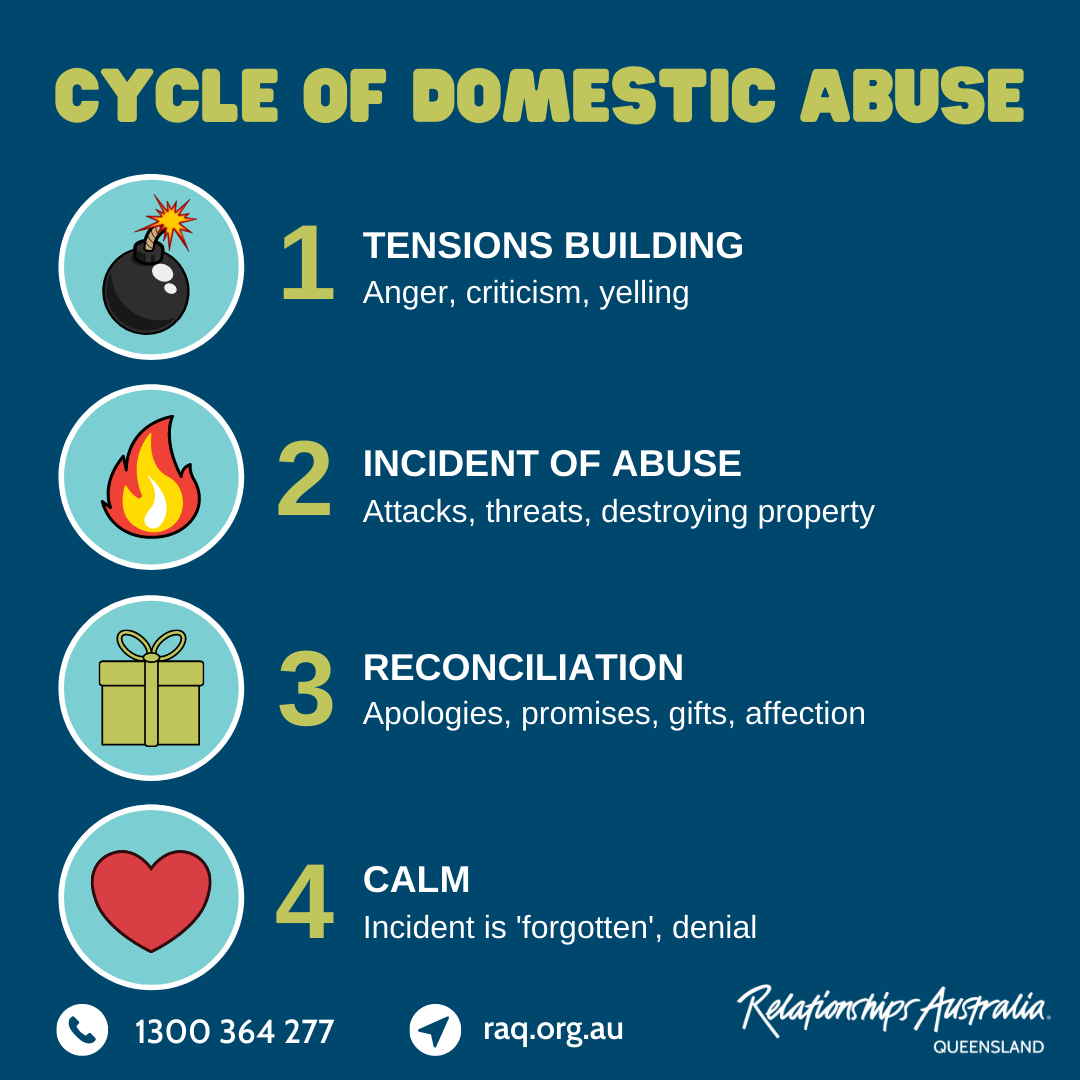
Domestic and family abuse is often described as something that happens in a pattern or cycle.

The domestic violence cycle of abuse proposed by psychologist Lenore Walker in the 1970s is still commonly referred to by professionals today.

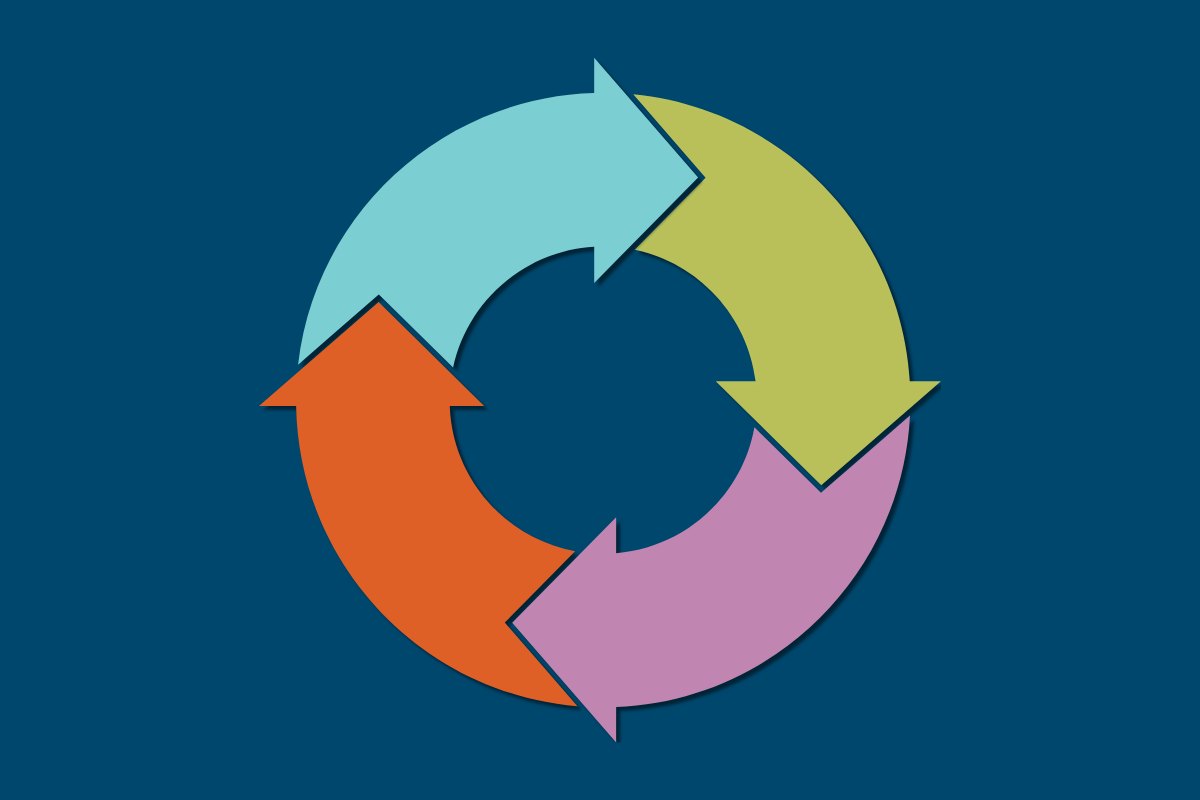
This cycle involves four stages:

  1. Tensions building
  2. Incident of abuse
  3. Reconciliation
  4. Calm.

This domestic violence cycle helps to illustrate common patterns of abusive behaviour in relationships.

We understand that everyone’s experience with domestic and family abuse is different, but this blog post will explore this particular domestic violence cycle and its four stages.


1. Building Tension

Things are starting to feel tense, and the victim is walking on eggshells in anticipation of an outburst.

The abuser is moody and withdraws affection. They become angry and swear, yell, insult and criticise the victim.

The victim tries to keep the abuser calm and prevent abuse by being agreeable and nurturing, and they may make efforts to keep children quiet and out of the way (if applicable).


2. An Incident of Abuse

An outburst of abuse erupts as the abuser releases this built-up tension on others in an attempt to gain control. It doesn’t have to be physical to be abuse.

Abuse might involve:

  • Physical or sexual violence
  • Insults or name-calling
  • Withholding money
  • Property destruction
  • Emotional manipulation
  • Threats of harm to victim, kids or pets
  • Controlling the victim’s behaviour (e.g. not allowing them to see friends).

We explore the different types of domestic violence in this blog post.


3. Reconciliation

This is where the abuser apologises and begs forgiveness. They often make promises that they’ll change and the behaviour will never happen again.

This is also known as the ‘honeymoon’ stage or ‘love bombing’, as the abuser will generally shower the victim with gifts and affection.


4. Calm

The event is ‘forgotten’ and the abuser and victim find some kind of justification for the abuse in order to keep the peace.

The abuser may give excuses for the abuse or place the blame on the victim, or deny the abuse was as bad as the victim claims. The victim might start questioning whether it was in fact as bad as they thought and start to doubt their recollection of events.

The victim may think whatever triggered the abuse has passed and it would never happen again.

If you or someone you know is living with domestic and family violence, help is available. You can call us on 1300 364 277 for guidance finding the right support for you, or learn about our Domestic and Family Violence Prevention service here.

Discover some of the common signs and triggers of domestic and family violence in our blog post Where Does Domestic Violence Start?.


Support Services

1800RESPECT: 1800 737 732

DVConnect Womensline: 1800 811 811

DVConnect Mensline: 1800 600 636

Sexual Assault Helpline: 1800 010 120

Kids Help Line: 1800 55 1800

Lifeline: 13 11 14

If you believe you or your children are in immediate danger, please call 000.

How to Make a Domestic Violence Safety Plan

If you’re experiencing domestic and family violence or abuse, you might like to prepare a domestic violence safety plan to increase your safety and look after yourself.

Including an escape plan in your domestic violence safety plan can help you act quickly in case you need to leave the environment in a hurry.

We offer some advice for making a domestic violence safety plan, and a checklist of what you might include in an emergency escape bag.

If you believe you or your children are in immediate danger, please call 000.


Creating a Domestic Violence Safety Plan

Everyone’s situation and needs are different, and your domestic violence safety plan should be updated if you move house or leave your relationship. But we hope this is a helpful guide when considering your domestic violence safety plan.

Tell someone you trust

It can be scary opening up to someone about what’s happening at home. But it’s important that someone knows about your situation so you have emotional and practical support and a potential witness.

If possible, you might even like to tell your neighbour/s. You don’t have to share all the details if you’re not comfortable. Simply tell them there’s been some trouble at home, and ask them to call the police on 000 if they hear violence or abuse.

Gather evidence

You might like to keep a record of the abuse in a diary. Include photos of injuries if possible. Having evidence of the abuse can help if you decide to press charges in the future.

Know the abuser’s triggers

It’s important to remember that there is never an excuse for any type of abuse. You’re not responsible for your abuser’s actions, and they alone are making the decision to use violence and abuse. With that being said, it can help to be aware of their triggers and what ‘sets them off’.

For example, if they tend to be more aggressive after a few drinks, try to avoid them and keep the kids in their room/s during this time.

Create an escape plan

It’s helpful to have a plan for what you’ll do, how you’ll do it, where you’ll go, who’s involved, and what you need to leave the environment – just in case. Think of it like a fire safety plan. It can even help to practise in your head how you’ll play out your escape plan should you need to.

Include an exit strategy such as walking the bins out to the street and continuing away from the home to your place of exit (e.g. friend’s house or the police station).

It can help to create your escape plan with a trusted loved one so they know what they need to do to help should the time come.

It’s important to remember that the period following leaving an abusive partner can be a dangerous time for a survivor of abuse. We offer advice to stay safe after leaving an abusive relationship in this blog post.


Escape Bag Checklist

These are some items you may like to have ready to take with you if you’re planning to leave an unsafe relationship or environment.

If you don’t feel safe keeping your emergency escape bag in your home, ask a neighbour or loved one to hold onto it for you.

  • Cash
  • Spare keys
  • Phone charger
  • Basic clothing for you and your children
  • Essential toiletries (e.g. toothpaste, toothbrush, sanitary items)
  • Medications and prescriptions
  • Passport and licence (or copies)
  • Contact numbers (e.g. friends, family, support services, legal services, taxi service)
  • Copies of important documents (e.g. birth certificates, healthcare cards, mortgage documents).

If you need support making a safety plan or escape bag checklist, contact Relationships Australia QLD on 1300 364 277.


Support for Domestic Violence

If you or someone you know is living with domestic and family violence, help is available.

You can call us on 1300 364 277 for guidance finding the right support for you, or learn about our Domestic and Family Violence Prevention service here.


Other support services

1800RESPECT: 1800 737 732

DVConnect Womensline: 1800 811 811

DVConnect Mensline: 1800 600 636

Sexual Assault Helpline: 1800 010 120

Kids Help Line: 1800 55 1800

Lifeline: 13 11 14

If you believe you or your children are in immediate danger, please call 000.

5 Self-Discovery Activities to Try This Weekend

Self-discovery allows us to learn our strengths, weaknesses, values and dreams. This comes organically through life experience, but self-discovery activities can be a great way to proactively examine your life, connect with your inner self, and take steps toward fulfilment.

The best part about self-discovery is that it never ends. Whatever your age and circumstances, there’s always more to uncover.

Dig a little deeper this weekend and learn more about yourself with these five fun exercises that encourage self-reflection.


1. Take a personality test

Personality tests are a great way to gain some insight into who you are right now, and not who you want to be. While we humans are extremely multifaceted and can’t be placed in a box, personality types can be a helpful general guide.

Myers-Briggs Type Indicator

The Myers-Briggs 16 Personalities Test is one of the most popular personality tests in the world and offers a “freakishly accurate” description of who you are and why you might do the things you do.

Big Five Personality Test

Another popular test that’s said to be scientifically sound, the Big Five Personality Test (also called Five Factor) assesses how you score in areas Openness, Conscientiousness, Extraversion, Agreeableness, and Neuroticism.

Five Love Languages

The Five Love Languages quiz reveals how you prefer to give and receive love – Quality Time, Words of Affirmation, Gifts, Acts of Service, or Physical Touch. It can be helpful for you to know this about yourself, and it can also be a fun self-discovery activity to do with your partner if applicable.


2. Do a questionnaire

Thought-provoking questionnaires generally encourage us to ponder things we otherwise wouldn’t. There are endless free self-discovery questionnaires available online and on Pinterest that will help you look within and hopefully unlock some enlightenment.

You might even like to do a questionnaire with a friend or loved one – it could start some very interesting conversations!


3. Start a journal

There’s a reason you see this suggested on all those lists about wellness and mental health. Journaling is a great way to get your thoughts out and manage stress, and it can also provide an opportunity to learn from your experiences, identify patterns, and increase self-awareness.

When you journal and reflect on your day or experience, you’re more likely to draw lessons and meanings from what you’ve gone through.


4. Ask trusted loved ones for feedback

It can help to hear about our strengths and weaknesses from an outside perspective. Ask a trusted friend, family member or significant other for some feedback about what you’re great at and where you might be able to improve.

This might be confronting, but it’s a great way to see ourselves as others do and take a step back from our own thoughts.


5. Try something you’ve never done before

What better way to surprise yourself than to try something new? There’s no limit to your self-growth so long as there are new things to do, see and experience.

It’s never too late to pick up a new hobby or try something you’ve always wanted to. Even if you’re a complete beginner, we can almost guarantee you’ll feel proud of yourself simply for giving it a go!

A new activity might include:

  • Boxing
  • Painting
  • Bouldering
  • Writing a poem or short story
  • Trying a new outfit or makeup look
  • Cooking your favourite restaurant meal from scratch
  • Building something simple like a bird house or side table.


If you liked these tips, you might like our blog post How to Stop Waiting to be Happy.

Types of Domestic Violence

Domestic and family violence comes in many forms. While every domestically violent relationship is based on power and control by the abuser, how this power and control is exerted can vary.

Many people picture physical hitting and visible bruises when they think of domestic violence. But it’s important to remember that not all domestic and family abuse is physical or easily identifiable, and all types of abuse are seriously dangerous and damaging to the survivor.

Some of the most common types of domestic violence include:

  • Physical abuse
  • Sexual abuse
  • Emotional and psychological abuse
  • Financial abuse
  • Technological abuse
  • Harassment or stalking.

Here are some examples of how these different types of domestic violence might look in an abusive relationship.


Physical Abuse

Physical abuse in a relationship often starts gradually, such as with pushing or grabbing, and then becomes progressively worse over time.

  • Hitting, punching, pushing, grabbing, kicking, shaking, biting, choking, or spitting on someone
  • Using weapons or objects to inflict pain (e.g. knives, belts, hot water, household objects)
  • Force-feeding
  • Withholding food, medicine, hand sanitiser and other necessary items


Sexual Abuse

It’s important to remember that sexual abuse doesn’t only include rape and touching; there are other nonphysical behaviours that are considered sexual abuse or harassment.

  • Touching or kissing someone without their consent
  • Forcing or pressuring someone to perform sexual acts or have sexual acts performed on them
  • Sexual assault using objects
  • Forcing someone to watch pornography
  • Filming someone involved in sexual acts without their consent
  • Criticising someone sexually
  • Using sex-related insults (e.g. “slut”)
  • Making unwanted sexual comments, suggestions, advances, or threats to another person
  • Forcing someone to undress or forcefully undressing them


Emotional and Psychological Abuse

Emotional and psychological abuse can be harder to spot than some other forms of abuse, but just as damaging to the victim.

  • Controlling what someone can do or say (e.g. how they dress)
  • Controlling who someone can and can’t speak to or see
  • Insulting or belittling someone
  • Using disrespectful language (e.g. swearing)
  • Being overly jealous and possessive
  • Constantly accusing someone of cheating
  • Yelling at someone
  • Treating someone like a servant
  • Comparing someone to others to damage their self-esteem
  • Blaming someone for all the problems in a relationship
  • Leaving nasty messages (e.g. texts, voicemail, Facebook)
  • Constantly criticising and correcting someone
  • Not allowing someone to voice their opinion
  • Not listening to someone’s needs
  • Threatening to harm someone, their children, property, or pet

Coercive control sits under this category, where manipulation and intimidation are used to create fear and dependency in a person.


Financial Abuse

Financial abuse often happens alongside other types of domestic violence, such as physical or emotional abuse.

  • Controlling how someone can spend their money
  • Stopping someone from accessing money or benefits
  • Demanding money from someone or taking their belongings
  • Forbidding someone from working or studying
  • Limiting the amount of petrol in the car


Technological Abuse

In this day and age, technological abuse is getting more common.

  • Using a phone or other technology to control or embarrass someone
  • Monitoring someone’s communication without them knowing
  • Controlling someone’s use of technology (e.g. isolating them from friends/family)


Harassment or Stalking

Whether in a relationship or not, these behaviours are considered harassment or stalking and are forms of domestic abuse.

  • Demanding to know where someone is and who they’re with at all times
  • Watching, following or monitoring someone
  • Monitoring someone’s personal information (e.g. texts, social media, emails, phone bills)
  • Harassing someone via internet or phone (e.g. constant calls, texts, emails)
  • Tracking someone via GPS devices and spyware


These are just some of the types of domestic violence. If something doesn’t feel right and you don’t feel safe in your relationship, it could be abuse.

If you or someone you know is living with domestic and family violence, help is available. You can call us on 1300 364 277 for guidance finding the right support for you, or learn about our Domestic and Family Violence Prevention service here.

We explore the effects of domestic violence in this blog post.


Other Support Services

1800RESPECT: 1800 737 732

DVConnect Womensline: 1800 811 811

DVConnect Mensline: 1800 600 636

Sexual Assault Helpline: 1800 010 120

Kids Help Line: 1800 55 1800

Lifeline: 13 11 14

If you believe you or your children are in immediate danger, please call 000.

Anxiety in Children

It’s normal for children to occasionally feel worried or anxious – such as when they start school or move to a new town. But for some children, anxiety can have an impact on how they think, behave and function every day.

Research shows almost 7% of Australian children aged 4-11 struggle with clinical symptoms of anxiety.

We asked RAQ Clinical Supervisor Karen Marshall to share some of the signs of anxiety in children, as well as some tips to help them manage it.


Signs of Anxiety in Children

Not everyone who has anxiety will experience the same symptoms, but these are some of the most common anxiety symptoms in children:

  • Crying often
  • Not eating properly
  • Using the toilet often
  • Difficulty concentrating
  • Irritability and outbursts
  • Rapid breathing or heartbeat
  • Being tired for no real season
  • Restlessness, fidgeting, or shakiness
  • Difficulty falling asleep or staying asleep
  • Complaining of tummy aches and feeling unwell
  • Constantly worrying or having negative thoughts
  • Being clingy or worrying about parental abandonment
  • Regression (denying ability to do tasks previously mastered).

It’s important to keep an eye out for these symptoms if you’re worried your child is having a hard time.

“Noticing children’s behaviours is a way to pick up on cues that children may be anxious, whether the child verbalises their anxiety or not,” Karen explains.


Causes of Anxiety in Children

Anxiety can develop in people of all ages for many different reasons. Some common causes for anxiety in children might include:

  • Abuse or neglect
  • Lack of predictable routine
  • Frequently moving house or school
  • The death of a close relative or friend
  • School-related issues like exams or bullying
  • Living with adults who are stressed or anxious
  • Conflict or tension between parents/caregivers
  • Becoming seriously ill or getting injured in an accident
  • Overemphasis on expected achievement (whether external or internal pressure).

“Friction or conflict between parents/caregivers can contribute considerably to anxiety in children,” says Karen. “Parents seeking their own support and reducing conflict can be best for reducing children’s anxiety around these matters.”


How to Support a Child Struggling with Anxiety

Karen offers a few tips to help your child cope with their anxiety and get through stressful situations.


Ask them how they’re feeling

If you notice your child is experiencing some symptoms of anxiety, confront the issue and ask them how they’re feeling.

“Talk to them calmly,” says Karen. “Help them to externalise the worry. For example, supporting them to draw their worry can be helpful.”

Listen with empathy and understanding, and avoid using invalidating phrases like stop being such a baby or there’s nothing to worry about. These can make your child feel unsupported and shameful about their anxious thoughts, which can make the anxiety even worse.

“It’s important that parents don’t minimise the child’s feelings,” Karen explains.

Your child is entitled to their feelings, and it’s your job to help them find healthy ways to cope when they get overwhelmed.


Model self-care

Kids pick up signals from adults. By showing calmness in stressful situations, you can model examples of healthy coping.

“Modelling self-care strategies to children is one important way a parent can support a child who is anxious,” Karen explains.

“For example, when driving in traffic with children and fearing you’re late for an appointment, take a deep breath and let it out slowly. Say to your children wow, this traffic is bad, but there’s nothing we can do about it. So let’s sing a song or talk about our favorite holiday/food/animal.”


Focus on their strengths

Children crave positive reinforcement from their parents/carers. Helping your child recognise their strengths can boost their self-esteem and help them remember when they’ve made it through tough times in the past.

“For example, if they’re worried about meeting new friends at a new school, remind them of the things that make them a good friend. Encourage them to smile to let people know they’re friendly,” suggests Karen.


Talk to their teacher

“Speaking to a child’s teacher or other key adults in a child’s life can give clarity and provide insight,” explains Karen.

“For example, some children don’t like to tell their parents they’re being bullied or having an unhappy time in their friendship groups, as many children see themselves as the cause of this rather than the victim. A teacher or other adult may be able to provide information that can be helpful.”


Be patient with them

Anxiety can sometimes impact a child’s behaviour. If your anxious child is misbehaving, try to have some understanding and keep things in perspective.

“It’s important to be open to seeing challenging behavior in children as an expression of anxiety or even trauma, and approach management of this behavior with calm and compassion,” says Karen.

“The support of a professional is always helpful to determine the cause of certain behaviors.”


Seek professional help

It’s a good idea to seek professional help or reassurance yourself if your child is constantly anxious and it’s not getting better and/or impacting their school or family life.

“Anxiety can lead to habitual behaviors. Contacting a professional for support can be useful in this case,” Karen explains. “Psychologists and counsellors who work with children will often recommend specific strategies accompanied by reward charts to support the child to break these habits.”

And don’t forget to look after yourself, too.

“Adults looking after their own wellbeing, modelling good strategies around their own anxiety, and seeking help early if needed can be so important for the mental health of their children,” says Karen.

You can learn about our counselling services here, or call 1300 364 277 to book an appointment in person, over the phone, or via Zoom video.

Read about the most common types of anxiety in this blog post.

When Your White Friends Won’t Talk About Race

Not all conversations are easy, but the difficult ones are often the most important.

Talking about race can make people uncomfortable – particularly people who benefit from the privilege that comes from being white.

They may not consider themselves racist. They might even call themselves an ally. So why is it that some white people go quiet or change the subject at the mention of the systemic racism that they benefit from? Why do some white people post a black square on their social media but refuse to engage in constructive conversation about Black Lives Matter, changing the date, or The Voice to Parliament?

First Nations Peoples – Aboriginal Peoples and Torres Strait Islander Peoples – and other Black Peoples and Peoples of Colour shouldn’t have to avoid these conversations to protect their white friends’ comfort.

And while it’s also not your job to educate your friends on these topics, real friends should be there to listen and learn when you do want to discuss these very real issues.

RAQ has had several clients seeking advice around how to have these conversations with the people in their lives over recent months.

So I sat down and had a yarn with Aunty Deb, our Aboriginal and Torres Strait Islander Engagement and Cultural Advisor, to get some insights on the topic. We wanted to share some ways you could start a conversation about race with your white friends.


Question their perception

Encourage your friends to reflect on how they see the world and what has formed their understanding of what they see.

Do they see First Nations Peoples in their daily lives? Do they see them represented in the media? How are they represented? Do they see stereotypes? Did their parents or friends ever talk about First Nations Peoples – Aboriginal Peoples and Torres Strait Islander Peoples – in a negative way?

These kinds of questions can help your friends consider their perception and start to think about how they can break the chains that constrain their thoughts. Our parents and/or the media might have given us ways to see the world, but it’s up to us to challenge and expand those.

Remember that how you bring people to an understanding is important.

Aunty Deb shared:

“It’s all about context – start with the person’s knowledge base. Try to understand what exposure they’ve had to First Nations Peoples’ collective knowledge of the facts of our colonial to present-day history. If the individual or group have had minimal exposure to this information, it’s important to provide an historical background with a timeline of historical facts from many sources of truth and alternative sources of history.

“For example, The First Australians SBS series and other historical texts by respected Historians like Noel Loos, Henry Reynolds, Bruce Pascoe, Jackie Huggins, Ray Evans. Some people have never heard or been taught these alternative historical viewpoints before.”


 “We won’t be constrained by your stagnant perceptions of who we are.”

– Paraphrased quote by Aunty Eve Feisel, SEQ Gubbi Gubbi Elder, Traditional Owner and Academic.


Encourage them to unpack their privilege

Whether they’re aware or not, your white friends are receiving advantages, opportunities and rights simply based on the colour of their skin. This is called ‘white privilege’.

Some examples of white privilege include:

  • Seeing people of your race widely represented in mainstream media
  • Being able to choose to be surrounded by people of your race most of the time
  • Easily finding makeup, Band-Aids, stockings and other items that match your skin tone
  • Easily finding picture books, dolls, greeting cards, and magazines featuring people of your race
  • Being able to swear in public or wear worn clothes without people attributing this to your race
  • Not having to think about how your race might impact how you’re treated
  • Not being called a racial slur
  • Not being profiled by police.

Ask your white friends about their privilege and the things they might take for granted each day. How do these separate them from, or connect them with, other people? A little self-awareness can help them start to see through the eyes of others and understand more about the systemic racism in our society.


Bring their attention to daily microaggressions

Racism and microaggressions happen all the time, but white people might not notice it (that’s a privilege in itself). If you’re comfortable, start to point out microaggressions as they happen.

If you experience a microaggression on your own or with a friend, bring it up and ask them if they saw a problem with what just happened. It could be someone asking where you’re from in a disrespectful way, a shopkeeper watching you more closely than others, or someone moving away from you on public transport.

This could be a great way to start a conversation about the very real racism you face in your everyday life and prompt them to keep an eye out for these behaviours in the future.


Call out performative activism

It can sometimes seem like white people post anti-racist and “woke” content to their social media accounts just for show. Some of the people who posted a black square for Black Lives Matter still chose to celebrate with friends on Invasion Day. Something’s not adding up here!

Ask them if they think their values and actions in real life align what they post on social media.

Are they practising what they preach? Or are they just calling out everyone else’s behaviour without doing the work themselves? It takes more than a social media post to fight racism.


Talk about how they can help

White people can use their privilege to advocate for issues faced by First Nations Peoples. Let them know about some of the common frustrations you experience and what requires advocacy in the wider community.

This could be a good way to raise awareness around key issues and also provide your white friends with some guidance if they want to help but don’t know where to start.

There are also several bystander action programs that offer simple steps to stand up to everyday racism, such as:

  • Confronting or disagreeing with the perpetrator (if safe to do so)
  • Calling it “racism” or “discrimination” (if productive to do so)
  • Interrupting or distracting the perpetrator (if safe to do so)
  • Comforting the person(s) targeted
  • Expressing upset feelings
  • Seeking assistance from friend, teacher, manager, coach etc.
  • Reporting the incident to authorities.


Encourage them to do their research

Your white friends can increase their exposure to First Nations Peoples and culture by actively seeking nonbiased representation in First Nations-led media and resources such as:

They can also raise their awareness by watching films and documentaries that highlight racial inequality and discrimination. There are also studies about the prevalence of discrimination in Australia and the harm it causes First Nations Peoples and communities.

Here are some statistics about discrimination and negative attitudes towards First Nations Peoples in Australia from a 2014 Beyond Blue study that you might like to discuss:

  • More than half of non-First Nations Australians have witnessed acts of discrimination towards First Nations Australians.
  • One in five (21%) admit they would move away if a First Nations Australian sat near them.
  • One in five (21%) admit they would watch the actions of a First Nations Australian in a retail environment.
  • One in 10 (12%) would tell jokes about First Nations Australians.
  • One in 10 (10%) would avoid sitting next to an First Nations Australian on public transport.
  • One in 10 (9%) would not hire an First Nations Australian for a job.

There’s no end to the information they can expose themselves to on the internet and beyond. It’s their responsibility to continually educate themselves about racism.


Know when to end it

As Aunty Deb says: “This is our country – First Nations Peoples have always lived here, and we should not be forced to be an aggressor in our own country. We’re not the problem.”

You’re not the problem. If your friend is causing you pain and frustration and is not willing to do the work or understand your experience, it’s OK to end that relationship.

You can protect yourself spiritually by removing yourself from people who don’t respect your culture and who you are as a person. You don’t have to spend the mental and emotional energy on educating or arguing with people who aren’t open to learning.

RAQ acknowledges the Traditional Owners on whose countries we live and work and Elders Past and Present. We pay tribute to their enduring stewardship, and honour their ongoing contribution to the spiritual, environmental, social, cultural, political and economic fabric of our society.


How to Have “The Talk” with Your Teenager

‘The birds and the bees’ is something we all learn about eventually, and it’s generally best that it comes from a parent or guardian. Learning about sex from the media and peers alone can leave kids and teens at risk of developing inaccurate and problematic beliefs and behaviours.

Teaching your kids about sex can help keep them informed, healthy, and safe. But how do you have the ‘sex talk’ with your teenager in a way that’s constructive and comfortable for everyone?

We hope this advice helps make that tricky conversation a little easier.


Find the right time

Give your teen a heads up that you’d like to have a chat about sex. This can give them time to prepare themselves and think of any questions they might have.

Sit them down in a private and comfortable environment, such as their bedroom or your living room. Ideally, find a time when they’re not distracted by looming exams or other stressful events.

If you’d prefer a more ‘organic’ way to discuss the subject, you might like to casually raise it with your teenager following a relevant event such as a family pregnancy, movie, song, or ad. These everyday moments can be the perfect springboard for the discussion.


Share the basic facts

You don’t have to be an expert, but you should know and share the basic facts about sex that can help keep your teen safe.

Some of these include:

  • What sex is and what behaviours can lead to pregnancy and sexually transmitted diseases (STDs)
  • Contraception such as condoms and birth control
  • Consent and boundaries, including how to give and respectfully receive a ‘no’
  • The social and legal risks of sexting and sending explicit images
  • Healthy vs. unhealthy romantic relationships
  • Questioning their sexuality.

Remember not to assume your teenager is heterosexual, and explain that STDs can be transmitted in same-sex encounters, too.

Read our article How to Support a Child Who is Questioning Their Gender or Sexuality for tips to support your child while they’re figuring out who they are.


Discuss your expectations

Be clear about your expectations. You can limit the time your teen spends with their peers without an adult around, ask them where they’re going and where they’ve been, give them a curfew, and have an ‘open bedroom door’ policy in your home. If they’re dating, get to know their partner’s parents and discuss your expectations with them, too.

Keep communication open with your teen and develop trust so they’ll be more likely to open up to you in future.


Encourage questions

Ask your teen if they have any questions or need further clarification around anything. Let them know you’re there for them if they ever want to talk about sex and relationships.

If they ask you something you don’t know the answer to, be honest. Tell them you’re not sure and do some research before getting back to them with accurate information.


Share some resources

Your teen might have some questions they’d rather explore on their own. Luckily, the internet is filled with great educational resources and answers at the touch of a button. But it can help to direct them to some credible resources where they can find trustworthy information when they need it.

Some helpful websites include:

For more helpful tips for parenting teens, check out this blog post.