1300 364 277
Quick Exit
This button appears across the site. Press this button to exit the site immediately to nondescript link
Click to close or press

Support for Domestic and Family Violence

Support is available for those affected by domestic and family violence.

Domestic and family violence is a complex and pervasive issue. It is never acceptable. Everyone deserves to feel safe in public and at home.

It is important to understand that the signs are not always obvious. Domestic and family violence is not always physical and can take many forms, including emotional, sexual, financial, social, spiritual, verbal, psychological or technology-based abuse.

You can find more information about domestic and family violence and different forms of abuse online at www.qld.gov.au/dfvsupport.

It is everyone’s responsibility to address this form of violence in our communities and work together to keep Queenslanders safe. If something doesn’t seem right, your support and action can make a difference. If you think you or someone you know may be experiencing domestic and family violence, reach out for support.

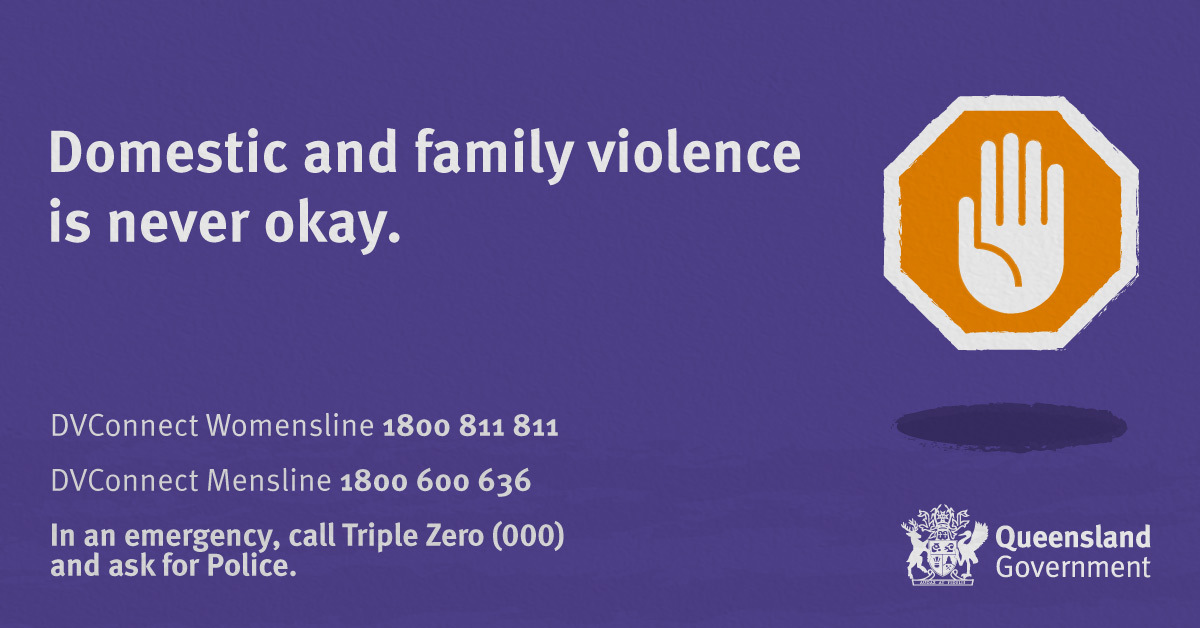
In an emergency, call Triple Zero (000) and ask for Police.

Call DVConnect for free, confidential crisis support.

DVConnect Womensline: 1800 811 811 (24/7)

DVConnect Mensline: 1800 600 636 (7 days, 9am to midnight)

10 Ways You Can Help Lonely Seniors

Seniors are no strangers to loneliness.

A recent Australian research paper reported that between 12%-30% of older people around the world experience loneliness. And our lonely seniors aren’t just bored and isolated – their mental and physical health is taking a hit, too.

The study found that lonely and socially isolated older people are more likely to experience depression, dementia, chronic pain, and physical frailty.

“Loneliness and social isolation in later life result in social exclusion, reduced wellbeing, and significant health problems,” it reported.

So how can we do our part to combat loneliness in the elderly? Well, we can start by supporting the lonely seniors in our own families and communities.

Here are ten ways you can help reduce loneliness in your older loved ones and promote their social connectedness.


1. Offer practical help

Turn mundane errands into social outings by assisting them with day-to-day tasks like grocery shopping, posting letters, and picking up medications.

Encourage them to keep important appointments by driving them to the doctor, physiotherapist, hairdresser, bank, or wherever else they need to go. Transport is a huge need among many older people, so they’ll likely appreciate the company and the door-to-door service.


2. Encourage hobbies

Hobbies aren’t just a great way to fill the time; they can also provide a sense of purpose. Ask your older loved one what activities they enjoy and how you can support them to engage in these activities regularly.

If they like gardening, help them find the tools and accessories they need to enjoy it. For example, a garden ‘kneeler’ or knee pads can help keep them comfortable on hard surfaces. If they like puzzles, gift them a new puzzle for every birthday or Christmas. If they like painting, show them how to find painting tutorials on YouTube.


3. Encourage social interaction

The only thing better than enjoying their favourite hobbies is enjoying them with others. Encourage your older loved one to partake in activities with other people, like an aerobics class or book club. This can help them make new friends and create a sense of community.

Many cities and towns have social activities and clubs specifically for seniors. You can search for activities nearby on websites like this, or ask the staff at their local RSL club.


4. Get them out of the house

Older adults can get into the all-too-comfortable habit of staying inside and sitting for long periods of time – often in their one favourite spot. But sitting at home all day can have negative impacts on their physical and mental health.

Getting outdoors can provide a much-needed change of scenery – but there’s a lot more to it than that. Research shows nature can have a kind of ‘healing’ power for seniors, with potential to provide the following benefits:

  • Reduced stress, anxiety and depression
  • Improved memory and concentration
  • Reduced chronic illness and pain
  • Increased energy levels
  • Increased longevity.

Take them out for a walk, visit a park for a picnic, or encourage them to have their morning cuppa in their backyard.


5. Keep them physically active

Some aches and pains can be inevitable in later life. But regular physical activity can be the silver bullet to managing pain and maintaining muscle strength and joint movement. It can also reduce symptoms of some mental conditions such as depression.

Your older loved one should be aiming for at least 30 minutes of moderate activity every day. Normal daily activities like shopping and cooking don’t count; they have to be working hard enough to increase their heartrate and break a sweat.

You might like to join them on a brisk walk or encourage them to sign up for a class where they can meet new people, like water aerobics or ballroom dancing.


6. Keep them mentally active

Mental fitness is just as important as physical fitness in older adults.

Crossword puzzles and other brain games can help seniors boost their memory and stay sharp. Maintaining an active social life and engaging in stimulating conversations are also great ways to improve mental fitness.


7. Maintain regular communication

Schedule in a weekly phone call to check how they’re going and what they’re up to. You could even organise a roster with other family members or friends to ensure someone is contacting your older loved one each day. Daily contact can be especially important for seniors who are fragile or unwell.

If you don’t have time for a phone call, simply sending a ‘good morning’ text or a photo update lets them know you’re thinking of them.


8. Make them feel needed

Some seniors might feel like they don’t have a whole lot to offer in their old age. Their families may have grown up and no longer rely on them for anything.

If they’re willing and able, make them feel needed and remind them of all they can contribute by asking them to pick up the kids from school, sew the button back on your shirt, or show you how to make their famous lasagne.


9. Ask them how they’re feeling

No matter our age, we all have stuff going on. Some older adults might not want to open up about how they’re feeling. Perhaps they don’t want to ‘burden’ their busy family and friends who seem to have a lot going on in their own lives, or maybe they simply prefer to ‘get on with it’. But it’s important to touch base in case something is troubling them.

If they mention an issue such as loneliness, ask them ways you can help, and offer ideas yourself. Always listen with empathy and let them know you’re there for them when they need you.


10. Show them they’re loved and valued

Along with explicitly telling them you love them and you enjoy seeing them, don’t forget to show them through your actions.

If they call, answer the phone – or remember to call back as soon as you can. If you have plans with them, be reliable and don’t cancel. Missing a visit or call may not seem like a big deal to you, but it could be really disappointing and upsetting for someone who doesn’t have much social contact with others.

And if they don’t call or visit you in return, respect that you may need to put in more effort than they can manage. Don’t give up on them.


If you or an older loved one need someone to talk to, our counsellors are here. You can learn more about our counselling services here, or call 1300 364 277 to make an appointment.

For specialised senior relationship services, discover our Elder Abuse Prevention and Support Service, Senior Financial Protection Service, Elder Mediation Support Service, and Senior Social Connection Program.
Do I Have a Gambling Problem?

Aussies love to gamble. From having a slap on the pokies to picking the first try-scorer in the footy, gambling is a popular – and widely accepted – form of entertainment in our culture.

But when does gambling go from harmless fun to a dangerous compulsion? How do you know if you have a gambling problem?

If you’re worried about your gambling habits, knowing the signs of a gambling problem can help you decide what action to take.


Signs of a Gambling Problem

These are just some of the common signs of a gambling problem.

Financial Signs

  • Borrowing or stealing money from friends and family to gamble
  • Selling belongings for money to gamble
  • Spending all disposable income on gambling
  • Spending more money than planned on gambling
  • Trying to chase losses with more gambling
  • Lying or being secretive about how much is spent on gambling
  • Constantly planning how to get more money to gamble
  • Needing to gamble with increasing amounts of money to get the same thrill
  • Avoiding social activities that cost money so you have that money to gamble
  • Considering getting money to gamble through illegal means

Behavioural Signs

  • Lying to people to hide the extent of the gambling
  • Less involvement in hobbies and leisure activities
  • Skipping work/school/important commitments to gamble
  • Spending more time gambling than planned
  • Using drugs and alcohol more often/excessively
  • Changes in sleeping, eating, or sexual relationship patterns
  • Constantly checking the odds
  • Trying to cut back on gambling, without success

Emotional Signs

  • Arguing with friends and family after or about gambling
  • Feeling guilty about gambling
  • Gambling to escape problems or feelings
  • Not feeling interested in friends, family, or normal activities
  • Feeling preoccupied with thoughts of gambling
  • Feeling worried, agitated or upset for no apparent reason
  • Feeling hopeless, depressed or suicidal


Support for Gambling

Gambling Help Queensland offers free and confidential support to anyone impacted by gambling. If gambling has become a problem for you or someone you know, you can call the 24/7 helpline on 1800 858 858 to talk or book an appointment with a counsellor.

The Problem with Power in Relationships

Do you feel like you’re stepping on eggshells with your partner? Do they ‘keep score’ and hold things against you to get their way?

Power exists in every relationship, whether it’s with your partner, a family member, friend, or even a colleague. A healthy relationship is based on equality and respect. It’s not uncommon for one person to take the lead while the other is more flexible, but this can become a problem when abused.

When one person has control in the relationship, or the ‘upper hand’, this can lead to unhealthy and toxic behaviours. It can make one partner feel scared of the other and damage their self-esteem. It can be a form of domestic abuse.

We look at the signs of an unhealthy power dynamic to help you spot when things are one-sided.


Types of Power in a Relationship

Two common relationship dynamics that play with power are the demand/withdraw and distancer/pursuer dynamics.

The demand/withdraw dynamic involves one partner (the demander) wanting to talk about problems and find a solution, while the other partner (the withdrawer) withdraws, shuts down, and avoids the problems.

The distancer/pursuer dynamic involves one partner (the pursuer) seeking to increase intimacy and closeness, while the other partner (the distancer) pulls away and becomes cold.

Research from The Gottman Institute shows that partners who get stuck in the distancer/pursuer pattern in the first few years of marriage have more than an 80% chance of divorcing in the first four or five years. 

These are just two examples of power imbalance in a relationship. Power and control can be used in relationships in many other ways – big and small, subconsciously and intentionally.


Signs of Power Imbalance in a Relationship

These are just some of the common signs of inequality in a relationship.

  • One partner never compromises – No two people are always going to agree on everything. Compromise or ‘meeting in the middle’ is key to ensure both people’s needs are met. If one partner is all take and no give, they’re holding all the power.
  • One partner doesn’t listen to the other – Communication is important in every relationship – whether romantic or not. If one partner refuses to listen to the other and take their ideas and feelings on board, it can be a sign of disrespect and selfishness.
  • One partner always takes the lead – Many relationships have an ‘alpha’ or the person who ‘wears the pants’. While this can be healthy and work well for some, it can be damaging for others if the dominant partner is abusing this role to fulfil their own selfish needs.
  • One partner’s love is conditional – Love shouldn’t be a reward for doing what your partner wants you to. It can be a clear sign of power imbalance when a partner withholds their love and affection until they get their way.
  • One partner holds grudges or keeps score – Some people can’t let things go. Even if they’re over it, they might take joy in constantly bringing up their partner’s past mistakes as a way to punish them and make themselves feel superior. This is an easy way for them to exert power and control.

Do any of these signs sound familiar to you or someone you know? Counselling can be helpful for individuals and couples trying to navigate power struggles. You can learn about our counselling services here, or call 1300 364 277 to book.

Study Results: Mental Health and Relationships

It’s no secret that 2020 has been a difficult year for many of us. The COVID-19 outbreak and related stressors (e.g. social isolation and financial instability) have exacerbated pre-existing anxiety disorders and other mental health disorders.

Our mental health influences how we think, feel, and act every day. It can have a big impact on how we interact with the people in our lives – especially those closest to us.

New research from Relationships Australia reveals the importance of relationships in supporting and maintaining our mental health, and how mental ill-health can impact our intimate relationships.

This survey was conducted during COVID-19 and offers some interesting insights into the challenges during this tough time.


Sensing a Struggle

Promisingly, most people feel they can recognise a change in their mental health and that of their close companions.

A whopping 96% of people reported that they can either always (46%) or sometimes (50%) tell if their own mental health is suffering.

95% of people said they know when a close companion’s mental health is suffering. Although, only 29% claimed they could always notice this change, while the majority (66%) could sometimes notice it.


Discussing Mental Health

Interestingly, people reported feeling more comfortable discussing their mental health with their friends (72%) than their family (53%).

70% of people reported feeling very (30%) or somewhat (40%) comfortable talking about their mental health with their partner.

33% of respondents reported feeling comfortable talking about their mental health with their colleagues. This could indicate that the topic of mental health is becoming less taboo in workplaces.

People felt least comfortable discussing their mental health with their neighbours.

The results show we’re more comfortable discussing the mental health of those around us than of ourselves. While only 2% of people felt very comfortable discussing their own mental health with their neighbours, 21% felt very comfortable discussing their neighbours’ mental health.

6% of people reported feeling very comfortable discussing their own mental health with their colleagues, compared to 28% who felt very comfortable discussing their colleagues’ mental health with them. 13% of people reported feeling very comfortable talking about their own mental health with their family, while a whopping 49% felt very comfortable discussing their family’s mental health with them.

Overall, 99% of people reported feeling comfortable discussing other people’s mental health, showing that we are willing to offer an ear when needed, even if we may not be comfortable seeking support ourselves.


Impact of Mental Health on Relationships

Unsurprisingly, a huge 88% of participants agree that their mental health affects the health of their relationship, and 84% agree that their partner’s mental health affects the health of their relationship.

Despite this result, 50% of people reported they would not let the fact that another person was suffering mental ill-health discourage them from beginning or continuing a relationship with that person.


Seeking Help

The study revealed that we prefer to seek help in person. Most respondents (66%) reported they prefer to seek professional help in person, while only 19% stated they would seek professional help online.

11% of respondents said they would not seek help at all, and 9% said they would not know where to go for help.

A massive 64% of participants indicated they would seek help from the people closest to them. However, 45% said they felt uncomfortable or very uncomfortable talking to their close contacts about their mental health.

If you’re having a tough time, talking to a counsellor might help. Our counsellors can help you explore the issues that are causing concern and support you to find solutions. You can learn more about our counselling services here, or call us on 1300 364 277 to book an appointment.

You can read the full survey results here.

How to Make Joint Child Custody Work

Co-parenting can be challenging – especially if things with your former spouse didn’t end well.

You might be stressed about money, worried about your ex’s parenting abilities, or simply tired of conflict. While it may be tricky for you to navigate this new arrangement, it’s important to remember that it’s not easy on your child, either. And it’s your job to do everything you can to help them adjust and thrive in their new ‘normal’.

Learn how to share custody of a child and make the transition as smooth as possible with these tips.


Always put the child first

Your relationship may be over, but your family isn’t.

No matter how stressful or frustrating it can be, it’s important to put your own emotions aside for the sake of your child. Conflict between parents can be hurtful for a child to witness – particularly if they feel like it’s their fault their parents are fighting.

Maintaining a civil co-parenting relationship is key. This means being flexible and cooperative when making shared decisions around your child’s care. Avoid making demands out of spite, and always keep your child’s best interests at heart to ensure arrangements are made with their wellbeing and stability in mind. Keep conversations focused on your child’s needs, not yours or your ex’s.


Co-parent as a team

It’s essential that you work together as a team when it comes to your child. Maintaining consistency with rules and discipline between both homes helps your child avoid confusion and know what’s expected of them.

If your child has lost privileges in one household, the other should follow through with this discipline. It’s important to present as a united front so your child knows you and your co-parent are on the same page.

If you’re struggling to agree on arrangements, you might like to try mediation. Mediation can help you communicate respectfully, navigate conflict, and come to a mutually acceptable solution.


Maintain routine where you can

Routine makes children feel safe. While their new ‘normal’ might come with some changes, it’s important to try and maintain a routine where you can.

Stay consistent with set days spent with each parent. Keep days structured with regular mealtimes and bedtimes across each household. Agree on meeting at the same place for every drop-off and pickup.

While you may need to be flexible at times, try to keep your joint child custody arrangements as predictable as possible, and remember to keep your child in the loop with as much notice as possible when things change.


Don’t put your child in the middle

No matter what your personal relationship is like, it’s essential to keep any issues with your co-parent away from your child. The last thing a child wants is to feel like they have to pick a side with their parents.

Avoid speaking negatively about your ex around your child. Your child deserves a relationship with their other parent, and complaining about them could unfairly influence their feelings. If you need to vent your frustrations or talk through your concerns, speak to a trusted friend or professional.

You should also avoid using your child as a messenger to get information to your ex. Always call, text, or email them directly. Seeing your relationship with your ex as a business partnership where your “business” is your child’s welfare can help you communicate in a civil and respectful manner.


Having a hard time agreeing on joint child custody arrangements? RAQ offers support for families who are considering separation, currently going through separation, or who have already separated. To find out what services might suit you, please call us on 1300 364 277 between 8am-8pm Monday-Friday or 10am-4pm Saturday.

How to Stop Waiting to be Happy

I’ll make time to relax when things settle down at work. I’ll wear that outfit when I’ve lost some weight. I’ll invite my friends over when I buy a bigger house. I’ll be happy when it’s Friday, or when I fall in love, or when I get my dream job.

Sound familiar? Of course it does! We’re all guilty of falling victim to “I’ll be happy when” syndrome. But why do we delay happiness until the ‘big thing’ we’re waiting for happens? Even when we achieve the ‘big thing’, we always find something else to chase, and the goalposts for happiness keep moving.

If we’re not careful, our whole life could be “I’ll be happy when”. So how can we stop tying our happiness to a target and enjoy the life we’re living now?

We hope these tips help if you’re stuck in the trap of putting your happiness on hold.


Rethink your definition of happiness

What does happiness look like to you? Is it something you seek, or something you are? Is it conditional or unconditional?

Conditional happiness is when you need to meet a condition in order to be happy. This is where the dreaded “I’ll be happy when” and “I’d be happy if” come in. It’s normal for material comforts and significant achievements to cause a spike in our happiness. But the problem is, this type of happiness is fleeting.

The temporary increase in happiness we feel when we get the pay rise, buy the car, or go on the trip eventually fades away and we’re back to where we were, wishing for the next big thing to make us happy.

It’s not to say you shouldn’t have goals. You’re allowed to want more. You can still be driven and have goals for self-improvement, but it’s important that you don’t get stuck in the mindset of thinking you’re not happy until you’ve reached those goals. It’s cliché, but happiness isn’t a destination, it’s a journey – and you can be happy with what you have while you work toward what you want.

Unconditional happiness means you’re happy regardless of external factors or what’s happening in your life. This doesn’t mean always being happy and never being upset. It’s normal to be disappointed or frustrated when things don’t go our way. But this enduring happiness allows us to be content and at peace through life’s ups and downs, and isn’t tied to achieving a certain outcome.

So again: What does real happiness look like to you? It might be having a sense of meaning and purpose in your life, a feeling of belonging with the people you love, or helping those who can’t help themselves.

Think about the times you’ve felt happy, what you were doing, where you were, who you were with, and recreate those feelings as much as possible.


Count your blessings

Remember when you wanted the things you have now?

No matter where you are in life, there are bound to be small things you can be grateful for. Try to check in daily and remind yourself of the good you’ve already got. We all have bad days, but there is some good in every day. Gratitude isn’t just great for our mood – it has plenty of other significant scientifically proven benefits, such as reducing depression and improving our physical health. If you can’t find things to be grateful for, create them. Business Insider Australia interviewed 21 billionaires to determine what happiness looks like to them.

They found that billionaires “regularly practise habits that breed happiness”. It turns out billionaires still appreciate and get happiness from the simple things in life, such as practising optimism, taking care of their health, giving back, and growing their own vegetables.

Be like the billionaires. Find small things you can do to actively nurture your happiness every day.


Avoid “all or nothing” thinking

Give yourself permission to make the most of your current circumstances while you work toward bigger things, because an all-or-nothing mindset can delay our quality of life.

For example, some people love being the host. Nothing makes them happier than being surrounded by loved ones, offering homemade snacks and a carefully selected playlist. If you live in a small rental, you may not be able to throw the grand events you dream of having when you have a larger home. But you can still host smaller gatherings and enjoy the happiness that comes with them.

The same goes for many things. You might be waiting for a pay rise to finally invest in a whole new wardrobe. Instead of denying yourself new clothes and feeling resentful, why not treat yourself to a couple of new pieces in the meantime? If you’re delaying making self-care a priority until work settles down, try dedicating just 20 minutes a day to meditating, calling a friend, reading, or watching funny dog videos (or whatever you’re into).

Stop sabotaging yourself and start doing what you can to make yourself happy now.


If you’re having a tough time finding happiness, talking to a counsellor can help. You can learn about our counselling services here, or call 1300 364 277 to book a session over the phone, over Zoom video chat, or in person.

Dating Someone with Kids

You met someone great. You get on like a house on fire. But there’s just one small thing: they have children.

Dating someone with kids can raise unique challenges. Whether you’re a kid person or you have no experience with them, you’re a parent yourself or living the childfree life, dating someone with a child is always going to bring some added potential for stress and complications.

But it can also be wonderful and rewarding, and the best package deal you’ve ever committed to.

We provide some pointers for dating someone with kids to help guide you on this exciting ride.


Ask about their kids

Even if you’re not ready to jump into step-parenting duties, that doesn’t mean you should avoid the subject altogether. Your partner’s children are a huge part of their life, and probably a part they love discussing.

Ask about their kids and show an interest in their life as a parent. This shows them you care about what’s going on for them, and helps build your connection and intimacy. It can also be a green flag and reassure them that you don’t see their kids as a hindrance in the relationship.


Respect that the kids come first

No matter how great your connection, the kids will always take priority. If you can’t cope with having your dinner date interrupted with phone calls to the babysitter, having to reschedule your plans because a little one has the chickenpox, or not getting a text back until after bath and story time, dating someone with a child might not be for you.

Things don’t always run smoothly when kids are involved. If you want the relationship to work, you’ll have to be understanding when your partner puts their kids’ needs before yours.


Don’t offer unsolicited parenting advice

Dating someone with kids doesn’t give you any parental authority over their kids, and telling your significant other how to raise or discipline their children is a big no-no. They’re likely copping enough unwanted ‘pearls of wisdom’ from their friends and family as it is.

If you’re upset or frustrated with the children’s behaviour, do what you can to keep yourself calm, and leave the parenting to your partner. If you witness really worrisome behaviour, bring it up with your partner in private, and allow them to make the parenting decisions.


Consider whether you’re serious before meeting the kids

For the sake of all involved, wait until you’re in a committed relationship before meeting the kids.

Being introduced to the kids is a big deal. It can be tough on young ones to meet someone new only for them to split a few weeks later. If you don’t see a future together yet, save the introductions for when you do.


Understand the kids might not welcome you right away

You could be the most fun, likeable, kid-friendly person around, but there’s still a chance their children won’t welcome you in as part of the family.

It can take years for kids to warm up to a new parent figure. Researcher and author Patricia Papernow reports that stepfamilies take around 7-12 years to adjust and to exist as a healthy, well-functioning system.

Don’t take it personally if your partner’s kids don’t welcome you with open arms right away – but don’t force the relationship, either. Be patient and respect their boundaries.

If you’re having relationship or parenting issues, speaking with a counsellor might help. Learn more about our confidential counselling services here or call 1300 364 277 to make an appointment.

What to do When Therapy Isn’t Working

Feel like therapy isn’t helping?

It can be frustrating to leave your counselling session feeling like you’re in the same place you were before you started. While you may not be seeing the progress you’d like, there are some things you can do to make sure you’re getting the most out of your sessions.

Here are some questions to ask yourself if therapy isn’t working for you.


Are you going regularly enough?

Change and healing take time and ongoing commitment, so don’t be discouraged if you don’t get results after one session. If you’re not going to counselling regularly (or as recommended by your counsellor), this could be why you’re not experiencing the benefits you’d hoped for.

Think of your mental health like your physical health. Going to a personal trainer once every few months isn’t going to get you where you want to be – and neither is going to therapy every now and then. Consistency is key.


Are you committing to the homework?

You only get out what you put in. If you’re not doing your part outside of the counselling session, you won’t see change as quickly.

Your counsellor might have given you ‘homework’ to do between sessions to help you practise new skills and/or coping strategies, or shift away from damaging behaviour patterns. This could be anything from journalling and breathing exercises to rehearsing important conversations. It can help to write down your homework immediately after each session so you don’t forget.

If you don’t feel like you’re getting enough homework, let your counsellor know you’d like more – and make sure you follow through. Applying these new recommended skills can help you accelerate progress and get closer to your goals.


Does your lifestyle support a healthy mind?

Similarly to the above, you can’t expect to see progress if you’re not making an effort to cope with your problems and support a positive wellbeing outside your sessions. Counselling is a safe space for you to explore your feelings and concerns and come up with ways to make things better. But it’s ultimately meant to empower you to get through tough times on your own.

Take a holistic approach to your wellbeing by looking at your lifestyle outside of the counselling room. Are you eating nutritious foods and moving your body every day? Are you getting enough sleep? Are you maintaining connections with supportive and loving people? All of these factors have an impact on your mental health and wellbeing.


Would you benefit from a different approach?

While you can’t expect a life-changing breakthrough in every single session, you should feel like you’re on the right track to resolving or coping with your issues.

There are lots of different types of therapy out there, and some approaches may not be right for you. If you feel like therapy isn’t working, it might be worth asking your counsellor if they can try a different approach or new strategies and techniques.


Do you need to be referred to a different counsellor?

If you feel like your sessions aren’t going anywhere or you don’t feel comfortable opening up with your current counsellor, it might be time to find someone new.

Counsellors know having the right fit is crucial for your progress. They want what’s best for you, and won’t take it personally if you ask to be referred to a different counsellor if you’re not quite clicking.

Learn how to make the most of counselling over video with these tips.