1300 364 277
Quick Exit
This button appears across the site. Press this button to exit the site immediately to nondescript link
Click to close or press

How to Help Someone Who is Grieving

It’s hard to see someone we care about hurting from a significant loss. While we want to be supportive, many of us worry we’ll say or do the wrong thing.

The good news is you don’t need to have all the answers. You just need to be there to offer love and support.

While everyone experiences grief differently, these general dos and don’ts may help you provide comfort when you’re not sure how.


Do:

Offer practical support

While emotional support is important at this time, your loved one might also appreciate some help with practical tasks like housework and errands. Offer to do a load of laundry, mow their lawn, pick up their kids from school, do their grocery shopping, and bring them precooked meals. Above all, ask them how they’d like you to support them to ensure they’re getting the kind of help they need.

Listen with compassion

Loss can bring on strong emotions like sadness, anger, and guilt. However they’re expressing their grief, don’t criticise, judge, or offer unsolicited advice on how to ‘get over it’. Listen with empathy and validate their feelings.

Let them be sad

It’s normal (and expected) for people who are grieving to experience sadness and despair. They may be depressed and struggle to get excited about anything for a while. Avoid trying to cheer them up or putting a positive spin on things with phrases like “They’re in a better place” or “Everything happens for a reason”. Allow them to feel what they need to feel for the first few days or weeks, and let them know they’re safe to express those feelings around you.

Be willing to sit in silence

There may be times when they don’t feel like talking. Avoid the temptation to fill every silence, and just be there with them as a shoulder to cry on or to offer a reassuring hug or hand squeeze. Don’t underestimate the comfort that can come from simply being present.

Continue to support them after the funeral

The funeral has been and gone. The world keeps turning, and everyone has moved on with their lives – except for the bereaved. Don’t go AWOL after the funeral has wrapped up and the sympathy flowers have wilted. Check in with your loved one often, and continue to offer emotional and practical support.


Don’t:

Don’t make it about you

The last thing they want to hear right now is “I know how you feel”. Even if you have experienced a similar loss, grief is different for every individual, and there’s never a good time to compare what they’re going through with your own experience. They probably don’t have the emotional capacity to care right now – and nor should they have to.

Don’t push them to open up

Some people don’t like talking about their feelings. Perhaps they’re not ready to open up about what’s happened or how they’re coping yet, and that’s OK. Don’t pressure them to talk about anything they’re not comfortable with. If they’d prefer to sit in silence, stay quiet with them and simply be their shoulder to cry on.

Don’t avoid the subject because you’re uncomfortable

Death isn’t exactly an everyday topic of conversation. In fact, it’s pretty taboo in a lot of western cultures. Many people find the subject uncomfortable, morose, and even scary. But now isn’t the time to prioritise your comfort over their need to express their grief, so don’t avoid or change the subject when they’re opening up to you.

Don’t forget

There may be anniversaries, holidays, birthdays etc. that trigger their grief for years to come, so show your support by checking in on them and continuing to share memories.

Don’t rush them

They say time heals all wounds, but it’s important to remember that grief cannot be healed. The process of grieving isn’t linear – it’s not a ‘one and done’ process where you tick off boxes and leave it all behind you. People who have experienced significant loss carry their grief with them forever.

Grief counsellor and researcher Dr Lois Tonkin’s ‘Growing around Grief’ model shows us how over time, grief stays much the same, but our lives begin to grow around it.
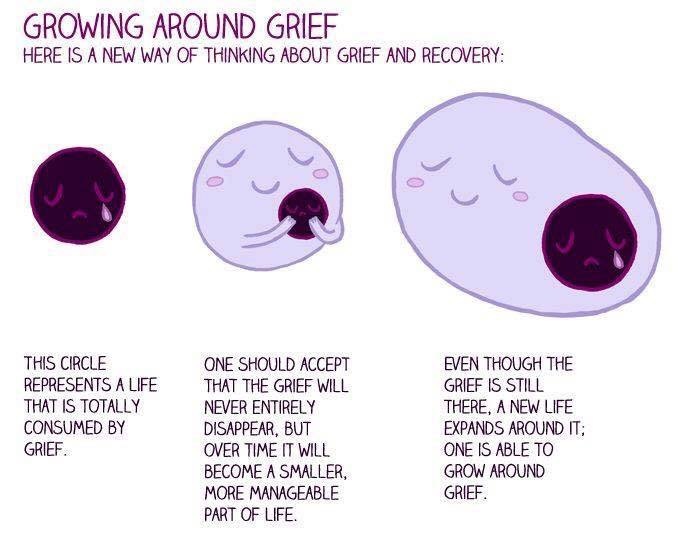
Tonkin's model of growing around grief - cartoon model showing grief and recovery


RAQ provides confidential counselling in a supportive and respectful environment. Our tertiary trained counsellors can assist with a range of issues including grief and loss. You can learn more about our counselling services here or call 1300 364 277 to make an appointment.

Learn how to support someone with depression and learn some of the warning signs of suicide in this article.

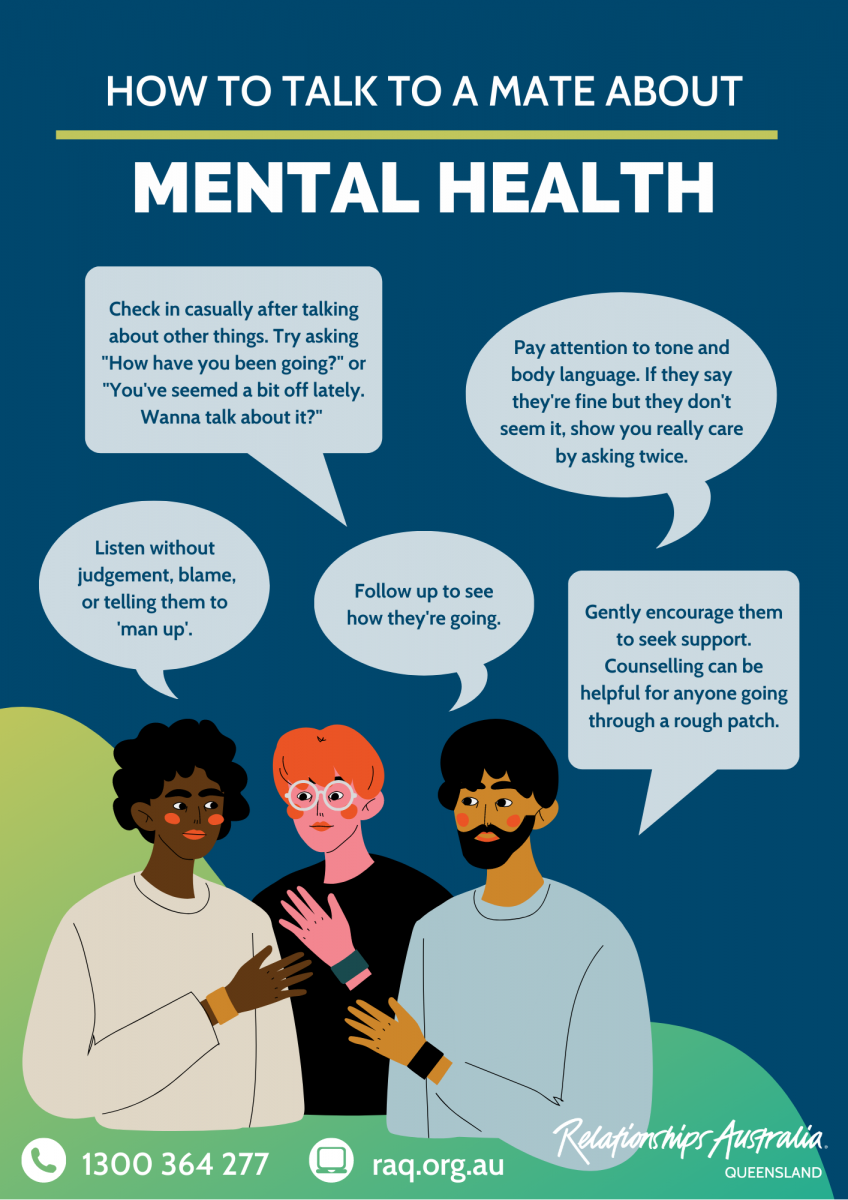
How to Talk to a Mate about Mental Health

Men are known for bottling things up. Some men might find it hard to talk about their feelings due to the stigma that still surrounds men’s mental health.

Outdated ideas that men should be strong and seeking help is a sign of weakness can prevent them from opening up or reaching out in tough times. So they often suffer in silence, which can make their mental health even worse.

Statistics show 1 in 8 men will experience depression, and 1 in 5 men will experience anxiety at some stage of their lives. The number of men who die by suicide in Australia every year is almost double the national road toll.

Talking to your mates about mental health can help remove the stigma and have positive impacts on their wellbeing. It could even help save a life.

We hope these tips on how to talk to men about mental health encourage supportive conversations with your mates when they’re doing it tough.


Check in casually

Asking how your mate’s going doesn’t have to be awkward or a big deal. Just bring it up casually after talking about other topics when they’re already relaxed. Research shows 63% of men are most comfortable talking about their mental health over a drink.

Some conversation starters might include:

  • How have you been going?
  • You’ve seemed a bit off lately. How are things going?
  • Sounds like work/school/home life has been pretty stressful for you lately. Want to tell me about it?
  • I heard you say something/noticed you do something that made me worry about you. Do you want to talk about it?

And remember, if your mate asks how you are, always ask them in return. A study revealed 35% of men said if they wanted to talk to a friend about their mental health, they’d ask how their friend is doing and hope they’d ask it back. This simple question could be a sign they’re not doing too well, so don’t skip over it.


Pay attention to tone and body language

It can be hard for men to open up about how they’re feeling. Sometimes they might not even know how to put it into words, and it can be so much easier to just fake a smile and say “I’m fine.”

It’s important to read between the lines if what they’re saying doesn’t line up with how they’re acting. If your mate is saying there’s nothing wrong but they’re looking away or stiffening up, it could be a sign there’s more going on beneath the surface.

Show you really care by asking twice. For example, if you ask how they’re going and they say they’re fine but they don’t seem it, you could follow up with something like: “Are you sure? You seem a bit down/stressed lately. Happy to chat about it if you want.” Now your mate knows you’re being genuine and are willing to listen if they’re ready to talk about it.


Listen without judgement

If someone has let their guard down and opened up about their mental health, you should make them feel supported and glad they confided in you. Avoid passing judgement, or they could shut down and avoid bringing it up again in future.

Don’t place blame, tell them what to do, make it about your own experiences, or tell them to ‘man up’. If you don’t know what to say, simply listen and encourage them to get it off their chest. Validate their feelings by saying something like:

  • That sounds really tough.
  • I’m sorry you’ve been going through that.
  • It sounds like things have been really hard for you lately.

Research shows 39% of men have had a disappointing reaction when they’ve shared things about their mental health in the past. Showing some empathy and support can help to avoid adding to this statistic.


Follow up to see how they’re going

Check in on them regularly to see how things have been and if they might need extra support. If they’re not coping, gently encourage them to seek help.

Counselling can be helpful for anyone suffering with mental health issues or going through a rough patch. RAQ offers confidential counselling in a supportive and respectful environment. Call 1300 364 277 to learn more or make an appointment.

Check out this article for tips to support someone with depression and to learn some of the common warning signs of suicide.


This advice is applicable to all genders – whether male, female, transgender, gender nonconforming or gender non-binary.


Can a Marriage Work After an Affair?

Infidelity can cause extreme emotional pain and heartbreak – but does it automatically mean the end of your marriage or relationship?

Short answer: It’s different for everyone.

Some couples may find it impossible to reconcile after an affair, with the pain of betrayal too strong for the relationship to progress. Others might work on their issues, rebuild trust, and become stronger than ever before.

Affairs don’t just happen in unhappy marriages or relationships. They can happen in couples that are otherwise happy and healthy. And if both parties are committed, the relationship can be saved.

In this article, we’ll look at what to do when someone cheats on you, and possible ways to recover your relationship after an affair.


What to do After an Affair

So you’ve been cheated on – now what? While people cope in different ways and what’s right for some might not be for others, these tips may help you find your footing during this tough time.

Address your needs

Learning your partner has been unfaithful can kick up a lot of negative feelings. It’s important to look after your emotional and physical needs during this time. Prioritise eating balanced meals, getting enough rest, and avoiding alcohol and drugs.

If you live together and need some space to process things, remove yourself from the situation and organise somewhere to stay – whether it’s with friends, family, or a motel.

Reach out to your support network

Being cheated on can be embarrassing and shameful. You may be tempted to withdraw from friends and family and isolate yourself while you process things. But surrounding yourself with supportive and loving people can make all the difference.

Deciding who you do and don’t tell – and how much you want to share – is a very personal thing. You don’t have to go into the nitty gritty details, but telling the people with your best interests at heart can help you feel less alone.

Remember it’s not about you

Your first response may be to ask what’s wrong with me? You may be left questioning your worth, whether you’re lovable or desirable, or if there’s something you did to deserve this.

It’s important to remind yourself that you’re not to blame for someone else’s behaviour. This was their choice, and it’s not a reflection on you. Even if you were having problems in the relationship, this is no excuse for having an affair. This happened because of their own issues, and not because you’re not good enough.

Prioritise self-care

Sleeping in until midday and snacking on ice cream and Doritos for days? Hey, many of us have been there. A little wallowing is expected, but try not to let your self-care slide when you need it most.

Along with addressing your physical needs like getting enough rest, eating right, and drinking plenty of water, make other forms of self-care a priority, too. Get up, take a shower, and put on an outfit that makes you feel good. Take time to get out of the house and see the people you love. Revisit the hobbies you enjoy. Whatever your self-care looks like, make it a must-do every day.

Have an honest conversation

If it’s safe to do so, talk to your partner about what’s happened. Don’t jump to conclusions or assume you know the full story. Be honest about why this has happened in your relationship, and if there were problems going on in the background. Allowing them to explain themselves might help give you closure, or help you decide whether the relationship is worth repairing or not.

Some signs it may not be worth moving forward with the relationship might include:

  • They have cheated before
  • They’re not remorseful or sorry for their actions
  • They don’t take responsibility for their actions/blame you for ‘making’ them cheat
  • They’re abusive (physically, verbally, mentally, emotionally, sexually, financially, or other).


Relationship Counselling After an Affair

If you do choose to rebuild your relationship, this will require a strong, long-term commitment from both partners. Relationship counselling can help you work through your issues and gain the skills needed to make your relationship successful.

Many relationship counsellors have seen marriages not only move past an affair, but become stronger than before.

You may want to consider counselling to discuss your feelings and have a safe space to explore yourselves, your situation, and your needs. 

Counselling can help couples to:

  • Prepare for changes in a relationship
  • Address sexual concerns
  • Understand the relationship they have
  • Discuss what they feel about each other now
  • Decide what they are prepared to do to make it work
  • Discover why they chose each other in the first place
  • Understand how they contributed to whatever their relationship has become
  • Deal with the pain of when relationships change or end.

Our trained counsellors are here to provide non-judgmental support and guidance. They don’t take sides or encourage couples to stay together or separate. Learn more about our relationship counselling here, or call 1300 364 277 to book an appointment.

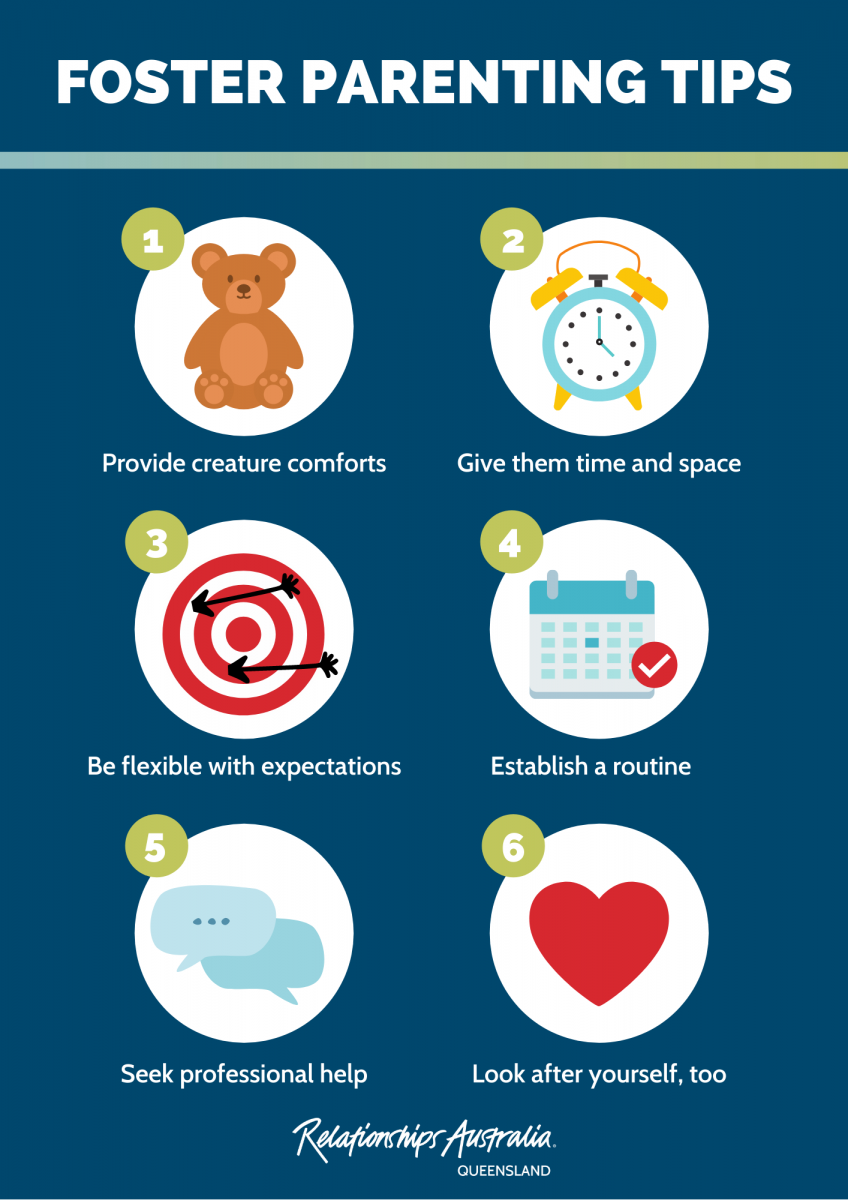
Foster Parenting Tips

Thinking of opening your home and heart to a foster child for the short-term or long-term?

Becoming a foster parent is a big step. The journey of a foster carer can have its challenges, but it can also be one of the most rewarding and worthwhile things you ever do.

If you’re a new foster parent feeling nervous about your first placement, we hope these foster parenting tips help you feel a little more prepared.


Provide their creature comforts

Along with the basics like clean clothes and personal hygiene items, make them feel as welcome as possible by providing their preferred creature comforts. Ask them what their favourite meals and snacks are, and if they’d like a night light or noise machine to sleep.

These small additions can make a huge difference for your foster child, helping them feel at home faster.


Give them time and space

It’s normal for foster carers to want to be there for their foster children right away. But it can take time for children to feel comfortable opening up – especially in an unfamiliar environment.

Give them time and space to get comfortable with their new home and with you. Let them know you’re there for them when they need you, but don’t push them to tell you about their past or how they’re feeling.


Establish a routine

Foster children often come from unsafe, abusive, or negligent backgrounds. They may have lived in chaotic environments where they didn’t know what was going to happen next.

The stability and predictability of a routine can help them feel safe and reduce their stress – and it can also teach and create boundaries. Establish a daily schedule and let them know what’s planned so they know what to expect.


Be flexible with your expectations

You might dream of taking a foster child under your wing, helping them turn their life around and thrive in school and social circles. But it’s important to remember that they’ve likely been through a lot, and they may not achieve the milestones you’ve set for them on your timeline – or ever.

Don’t get too attached to your expectations or how you’d like your time together to go. Instead, be patient and understanding, and support your foster child to do their best at their own pace.


Seek professional help if needed

Your foster child might need extra support processing their trauma and feelings. A professional counsellor can help them explore their emotions and deal with their concerns in a supportive and confidential environment.

This applies to you, too. Caring for a child in need can be stressful and overwhelming at times. Remember to look after yourself and talk to a professional if you need to.

You can learn more about our counselling services here, or call 1300 364 277 to book an appointment.


How to Help Someone with a Gambling Problem

Worried someone you care about might have a gambling problem?

A gambling problem or gambling addiction can have serious impacts on the gambler and the people around them. These impacts aren’t just financial, either. Problem gambling can lead to relationship breakdowns and can negatively impact mental health, causing depression and anxiety.

Recovering from a gambling problem isn’t easy, and the right encouragement from friends and family can make a significant difference. But where do you even start?

It can be hard to know how to help a loved one with unhealthy gambling habits. We hope this advice helps you better understand what they may be going through, provide support, and encourage them on the road to recovery.


Know the signs

A gambling problem can be easy to hide. Some signs of a gambling problem can be so subtle that even the gambler may not think they have an issue.

Not all gambling is a problem. But if someone you care about is displaying these signs, it may mean gambling has become a problem for them.

  • Hiding the extent of their gambling
  • Trying to win back their gambling losses
  • Feeling guilty or remorseful about gambling
  • Arguing with family and friends after gambling
  • Withdrawing and disconnecting from their loved ones
  • Spending more time or money gambling than planned
  • Borrowing money, getting a loan, or selling their things to gamble
  • Finding it hard not to gamble at every opportunity, or to stop gambling once they’ve started
  • Neglecting other activities to gamble (e.g. work, time with friends and family, their regular leisure activities).

These are just some behaviours that might indicate a gambling problem or compulsion.


Understand problem gambling

It’s important to remember that gambling is the problem – the person is not. As well as knowing what warning signs to look for, it may help to deepen your understanding of why your loved one might be gambling in the first place.

Knowing more about their situation can help you develop understanding and compassion – even if you’re angry or upset with them for their gambling behaviours.

Some common reasons people gamble include:

  • Out of boredom or loneliness
  • To escape worries, problems, and negative emotions.

Many problem gamblers feel shame and guilt around their behaviour and how it impacts those around them. Unfortunately, these overwhelming emotions can lead to ongoing gambling.


Start the conversation

Raise the topic in a private setting when you’re one-on-one. You might like to gently bring it up after you’ve already been talking about other things to ensure they’re comfortable and relaxed.

Try to voice your concern in a respectful and calm way, and avoid coming across as accusatory or judgemental. This can make them become defensive or shut down entirely. Instead of pointing the finger, use “I” statements to tell them what’s been worrying you.

For example:

  • “I feel like gambling is affecting our relationship.”
  • “I’ve noticed you’re spending a lot of time on gambling apps.”
  • “I’m worried betting is causing stress for you.”


Suggest helpful resources

You can’t force your friend or family member to stop gambling. Instead, offer some relevant resources to encourage them to start their journey to recovery.

  • Check Your Gambling – This short online quiz allows users to check whether their gambling is becoming a problem based on the Problem Gambling Severity Index.
  • Spend Calculator – This gambling spend calculator requires users to think about how much they really spend on gambling, and what that money could be buying them instead.
  • Self-Exclusion – A self-exclusion or self-ban allows users to ban themselves from specific gambling providers, products, or services.
  • 1800 858 858 – This gambling helpline is available 24/7. Anyone impacted by gambling can call to talk to a gambling counsellor over the phone or book a face-to-face counselling session.


Get support for yourself

Those close to someone with problem gambling behaviour can often experience feelings of sadness, stress, anger, and hopelessness. It’s important to prioritise your own emotional wellbeing and seek help if needed.

It’s easy to focus all your energy and attention on trying to change the behaviour of the gambler – but this can mean your own self-care and needs are forgotten.

Friends and family of problem gamblers are also eligible for counselling support. This support may help you to develop strategies to care for yourself while supporting your loved one, take care of your own mental health and wellbeing, and learn ways to reduce the harm caused by your loved one’s gambling behaviour. You can learn more about our Gambling Help Program here, or call us on 1300 364 277 to make an appointment.


Is gambling a common argument topic in your relationship? Learn how to have a healthy argument and what to avoid in the heat of the moment with our article How to Fight Fair in a Relationship.

Should we break up?

Should you break up with your partner? Or are you just going through a rough patch?

Every relationship has its issues. But while disagreements are normal, there are some problems that may make you question the future of your relationship.

In this article, we look at some of the ways to work through your problems, and some signs it might be time to let go.


When to break up

Every relationship is different, and only you know what’s best for you. These are just some signs your relationship may not be healthy.

Your partner is abusive

Abuse – whether it’s physical, emotional, financial, or other – is never OK. If your partner is hurting you, controlling you, manipulating you, or making you feel bad about yourself, you may want to talk to trusted friends or family members about ways you can exit the relationship safely.

You’re hiding them from your loved ones

If you’ve been with your partner for a while and you’re hesitant to introduce them to your friends and family, this could be a red flag worth paying attention to.

Someone has cheated

Research shows unfaithfulness is one of the main reasons couples break up. An infidelity doesn’t have to mean the end of a relationship. But cheating can have serious and long-lasting impacts if you can’t rebuild the trust you once had, leaving one or both partners feeling resentful and unhappy.

You’re not yourself around them

If you’re conscious of how you act around your partner, you probably won’t be happy in the long run. Signs you’re not comfortable to be your full self around your partner might include monitoring the things you say around them, tiptoeing or hiding things from them, pretending to like things you don’t and pretending not to like things you do, and worrying they’ll judge you.

You can’t communicate

They say communication is key in a healthy relationship, and silence is never golden. Maybe you avoid confrontation and sweep it under the rug, or you give each other the silent treatment when you’re unhappy. If you have poor communication and don’t talk things through in a respectful way, you may never find solutions for your problems.

You’ve been trying to make things work for a long time

Finally, if you’ve been unhappy in your relationship and thinking about ending things for a while, it might be time to seriously consider your options.


How to get through a rough patch

No relationship is all good all the time. Even the happiest and healthiest couples run into some rough patches now and then. The good news is, you can make it through – and sometimes, you can even come out stronger than ever.

Talk about your issues

Neither of you can read minds, so don’t expect your partner to know how you feel and what you want them to do. If safe to do so, bring up your concerns with your partner when you have some alone time together. Tell them what’s upsetting you, and be clear about what you’d like to happen. Avoid name-calling and finger-pointing.

For example, instead of: “You never have time for me. You’re always with your friends”, you might say: “I value our quality time together. I’d like it if we had a date night every week.”

Family and Relationship Counsellor Val Holden explains how to have a healthy argument and things to avoid when confronting your partner in this article.

Try relationship counselling

If you find it difficult to communicate with your partner, or you seem to be having the same argument over and over again, it might be time to consider seeing a professional.

RAQ provides confidential relationship counselling in a relaxed and supportive environment. Our trained counsellors can work with you to find ways to manage your situation more effectively.

If you need some extra support, you can book individual counselling our couples counselling on 1300 364 277.

What to do if You Think Your Friend is in an Abusive Relationship

Worried a friend or someone you know is in an abusive or unhealthy relationship, but not sure what to do?

Whether you suspect the abuse is physical, emotional, financial or other, it can be hard to know how to support someone in this situation.

Learn some of the signs that might indicate your friend is in an abusive relationship, and how you can help.


Know the signs of abuse

There are many different types of domestic and family abuse, and some of them can be harder to spot than others. Not all abuse involves hitting or can be identified by bruises or physical wounds.

Some less obvious warning signs your friend is in an abusive relationship might include:

  • They’re noticeably less confident
  • They’re always strapped for cash
  • Their social media presence changes
  • They’re always distracted or preoccupied
  • Their other relationships start breaking down
  • They avoid talking about their partner and relationship
  • They seem nervous or on eggshells around their partner
  • They often appear tired or as though they’ve been crying
  • Their partner is always texting or calling when they’re apart
  • Their clothing and/or grooming habits have changed significantly
  • Their behaviour and/or body language changes around their partner
  • Their partner puts them down or insults them, even in a ‘joking’ way
  • They’re withdrawn, less responsive, and less social than they used to be
  • They wear longer clothing in warm weather (may be a way to hide wounds).


Ask how things are going

Find an appropriate time to ask how they are when you’re alone together in a private setting. You might like to bring it up after some initial casual chat to ease into the conversation. Remain calm as you voice your concern. You want them to feel comfortable talking openly with you, so avoid coming off as panicked, preachy, or judgemental.

If you’ve noticed any signs of abuse, gently mention these specific behaviours. For example, “I’ve noticed your partner checks in on you a lot with texts and calls. How do you feel about that?” Your friend might not even recognise that what they’re experiencing is abuse, so by focusing on specifics, your friend may be able to understand for themselves what they think is appropriate and healthy in a relationship.

Respect their boundaries and don’t probe for information if they’re not comfortable sharing. Remember that it’s likely very hard for them to talk about.


Tell them you’re there for them

Let your friend know that they’re not alone and you want to help in any way they need. Provide them with a safe and supportive space to talk about what they’re going through, and listen with empathy and without judgement or blame.

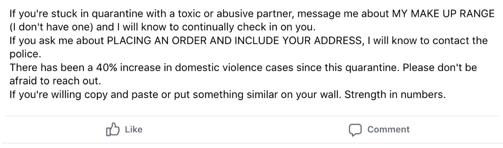
Gently offer other ways you can support them, such as helping them come up with a safety plan and giving them a place to stay if they need it. Some people use social media creatively to provide support in a discreet way. For example:


Don’t pressure them to make a decision

No one likes to see someone they care about in an unhealthy, dangerous or damaging situation. But the last thing you want to do is tell your friend to ‘just break up’ with their partner. This pressure can make them feel even worse during an already difficult time, and may prevent them from opening up to you again.

Unhealthy and abusive relationships are complicated, and leaving an abusive partner can be risky. Allow your friend to make their own decision in their own time, and let them know you’ll stand by them no matter what.


Offer resources

There are many support services and resources available for people experiencing domestic and family abuse. It might be helpful to pass some relevant contact details on in case they’re ever needed, or ask your friend if they need help finding support. Depending on their situation at home, they may not have access to research support services.

There is still hope for some unhealthy relationships. If your friend is unsure whether their relationship is unhealthy or abusive, they don’t need to have the answers. RAQ’s trained counsellors can help individuals and couples work through their relationship concerns. Counselling appointments can be booked by calling 1300 364 277.

Some other helpful resources include:

1800RESPECT: 1800 737 732

DV Connect Womensline: 1800 811 811

DV Connect Mensline: 1800 600 636

Sexual Assault Helpline: 1800 010 120

Kids Help Line: 1800 55 1800

Lifeline: 13 11 14


Check in on them

If your friend tells you about abuse at home, or you suspect they’re in an unhealthy relationship, be sure to maintain contact with them and check in on them regularly.

While you can’t fix the situation or control the outcome, you can be there for them and provide support when they need it.

You can learn more about the effects of domestic violence here.

Physical Effects of Anxiety

Anxiety is a serious mental health condition that can make us feel worried, nervous, and afraid. It’s known for changing how we think and behave. But did you know it can also have real impacts on our physical health?

This is because anxiety is the body’s reaction to stress or perceived threats, and can trigger the fight-or-flight response. Someone with chronic anxiety might experience physical symptoms occasionally or every day, as their body is constantly in a state of high alert.

Learn what anxiety does to the body here.


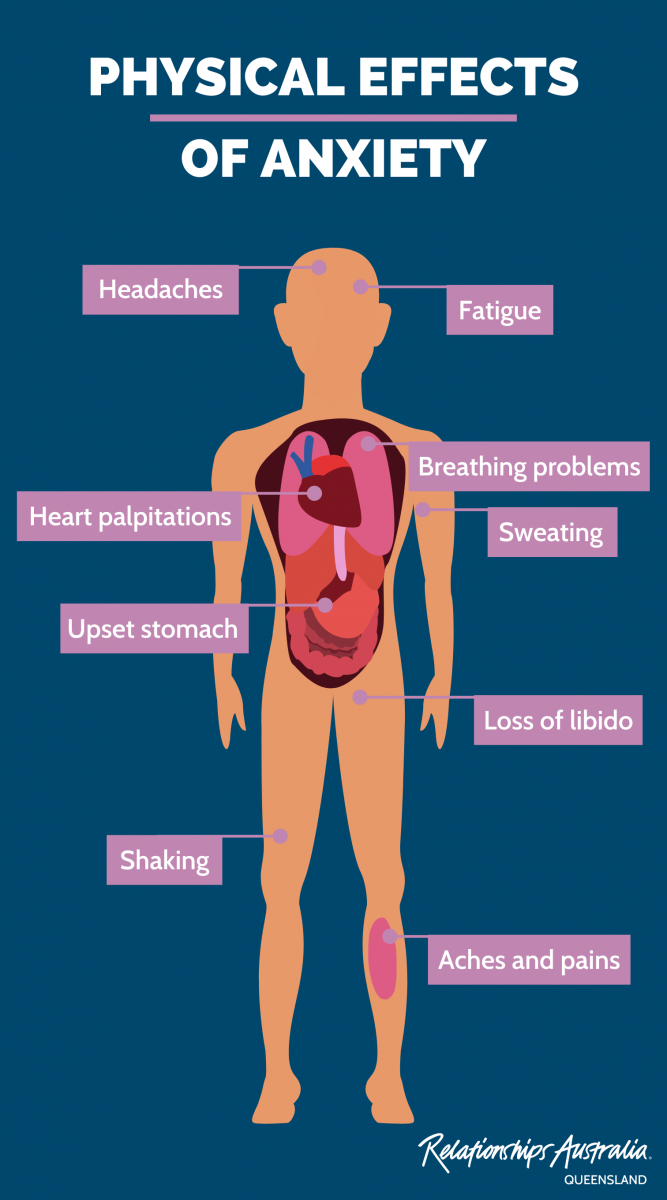
Headaches

Can’t pinpoint what’s causing those niggling headaches? Anxiety might be the culprit. Constant stress and worry can lead to headaches and painful migraines. A hot bath or shower may help to relieve some pain.

Upset stomach

It’s common for people with anxiety to experience stomach pain, nausea, diarrhoea and other digestive issues. Research has shown a strong connection between the brain and the gut. This might explain why we feel ‘butterflies’ when we’re nervous, or why stomach problems are one of the most common symptoms of stress and anxiety.

Breathing problems

Some people with an anxiety or panic disorder might experience breathing difficulties. Shortness of breath and fast, shallow breathing are common physical effects of anxiety. Some people might even experience hyperventilation. Deep breathing exercises are a great way to regulate your nervous system if you feel an anxiety or panic attack coming on.

Heart palpitations

When you’re anxious, it might feel like your heart is going to burst right out of your chest. A pounding heart and heart palpitations can be worrying physical side effects of anxiety, but they normally subside as the anxiety or panic lifts.

Fatigue

Anxiety isn’t just tough on us mentally and emotionally – it can also be physically exhausting. All those stress hormones can leave us drained and flat. Fatigue is a common side effect of anxiety, as is difficulty falling and staying asleep at night.

Aches and pains

Feel like you’ve run a marathon every day? Muscle and joint aches and pains are a very real physical side effect of anxiety – the most common being neck, back, and shoulder pain. Try stretching every morning and checking your posture throughout the day.

Loss of libido

Anxiety, just like many other mental health conditions, can have an impact on your sex life. It’s not uncommon to experience low libido when you have an anxiety disorder. Whether you’re distracted by anxious thoughts or you’re simply too tired from all the other physical effects of anxiety, it can be difficult to get in the mood.

Sweating

Sweating is a common physical effect of anxiety disorders. Some people are chronic ‘nervous sweaters’ and experience excessive sweating in social situations. Unfortunately, the concern or embarrassment around sweating can fuel the anxiety and worsen the symptom.

Shaking

Have you ever trembled with fear before a big presentation or public speaking event? Shaking and shivering can be caused by anxiety-induced hormone surges.

These are just some of the physical effects of anxiety. Research shows having severe anxiety can increase the likelihood of serious health issues like asthma, heart disease, back problems, ulcers, and eyesight difficulties.

Our counsellors can support you in dealing with your anxiety in a supportive, respectful, and confidential environment. Learn more about our counselling services and how to book an appointment here.

Learn about the different types of anxiety in this blog post.


Infographic displaying physical effects of anxiety on human body

How to Support a Child Who is Questioning Their Gender or Sexuality

It’s normal for children and teens to explore how they identify and who they’re attracted to. But if your child isn’t sure where they sit on the gender or sexuality spectrum, they may feel anything but normal.  Love and support from family is crucial during this confusing time.

But talking to your child about gender, sex and identity can be overwhelming. These topics aren’t as black and white as some people might think, and it can be hard to know where to start.

We hope these tips help you support your child while they’re figuring out who they are.


Listen and learn

It takes a lot of courage to open up about gender and/or sexuality. Chances are your child is worried about how you’ll react, fearing the possibility of judgement and rejection. When your child trusts you enough to talk about these things, really listen to them and try to understand their experience. Show genuine interest and curiosity while respecting their boundaries.

Believe what they’re telling you, and avoid brushing it off as a ‘phase’. This negative attitude can be invalidating to your child and prevent them from opening up again.


Create a loving home environment

The best way you can support your child is to accept them for who they are, and let them know they’re loved unconditionally. Ensure your home environment is a safe space where they’re free to express themselves without judgement. Show them encouragement and praise for being open with you.

Avoid using derogatory language, pressuring them to conform to social norms (e.g. wearing certain clothes), or making jokes about their identity and/or expression. Respect their privacy and don’t push them to answer intrusive questions or disclose anything they don’t want to.


Do your research

Improve your understanding of LGBTQIA+ experiences and issues by doing some research online. Familiarise yourself with the appropriate terminology and language and be respectful of your child’s preferred pronouns (e.g. he/him, she/her, they/their, or other).

Some relevant terms might include:

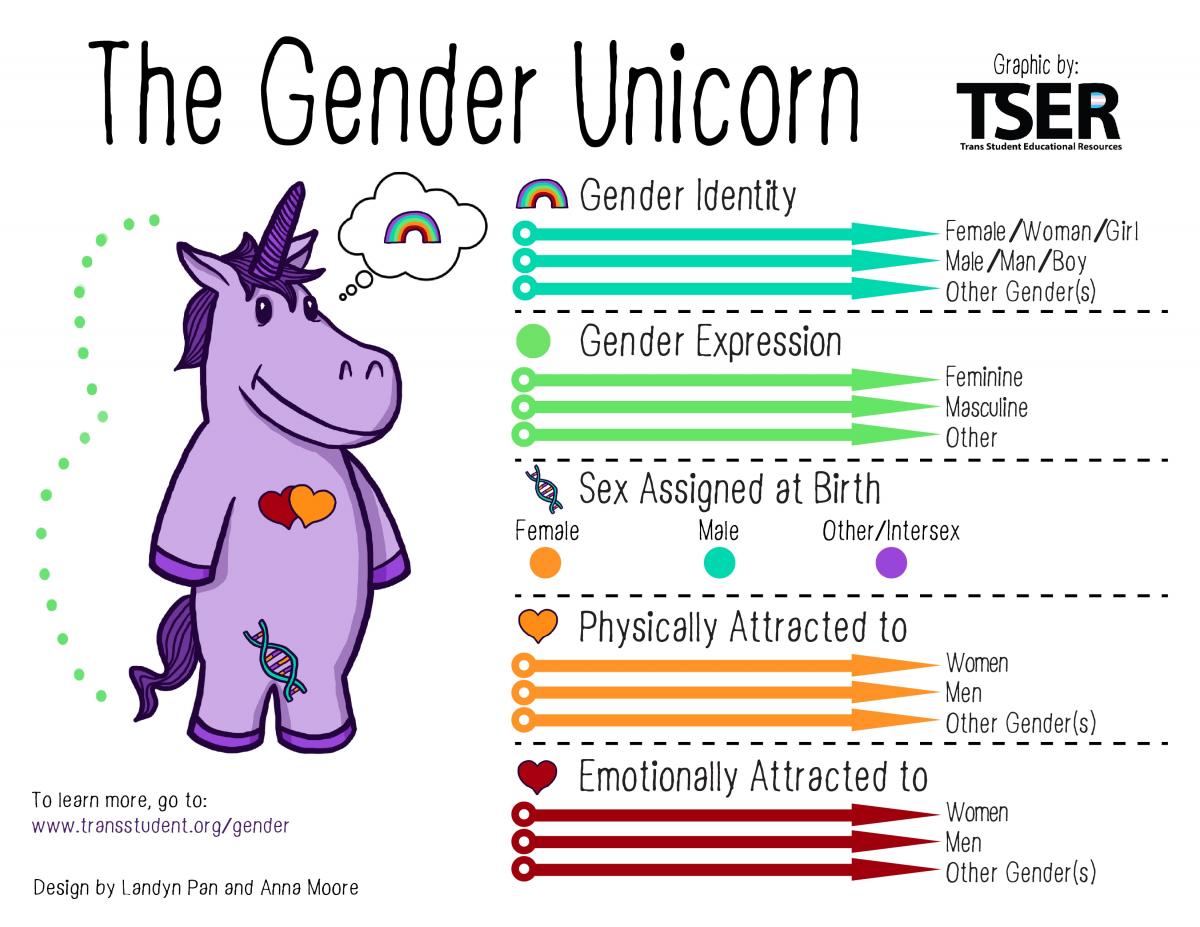
  • Gender identity: A person’s sense of being male or female or somewhere else on the gender spectrum.
  • Sex assigned at birth: The sex classification people are given at birth based on genitalia.
  • Transgender: A person who does not exclusively identify with the gender they were assigned at birth
  • Cisgender: A person whose gender identity is the same as their sex assigned at birth.
  • Gender nonbinary: A person who identifies as both male and female, somewhere in between the two, or neither.
  • Gender fluid: When a person’s gender identity shifts between male and female. Their sense of where they are on the spectrum can change over time – even from day to day.
  • Lesbian: A woman or feminine-identifying person who wants to be in a relationship with another woman.
  • Gay: A man who wants to be in a relationship with another man (though sometimes lesbians also use this term).
  • Bisexual: Someone who is sexually attracted to both men and women.
  • Pansexual: Someone who is interested in having relationships with all gender identities/expressions.

The Gender Unicorn can be a helpful resource for parents/carers and children.

The Gender Unicorn infpgraphic shows difference between gender identity, expression, sex assigned at birth, and attraction


Don’t disclose without permission

Coming out is difficult, and a significant event your child will likely remember for the rest of their life. Don’t take away their right to disclose their personal information in their own time. Allow your child to dictate who they do and don’t want to know about this information.

This is a time of exploration and discovery, and your child might not want the entire extended family, all their teachers, or the neighbours to know how they’re feeling until they’ve figured it out for themselves.


Monitor their mental health

It’s tough enough being a kid sometimes, and unfortunately, LGBTQIA+ youth can face additional challenges. Research shows LGBT young people are nearly twice as likely to engage in self-injury than their similar-aged peers.

Keep an eye on your child for signs of withdrawal, depression, or self-harm. If you do notice any of these behaviours or other behaviour changes that signal alarm bells for you, remind your child you’re there for them, and seek support from your GP.