1300 364 277
Quick Exit
This button appears across the site. Press this button to exit the site immediately to nondescript link
Click to close or press

Study Results: COVID-19 is Making Us Drink More and Text Less

Has the coronavirus outbreak impacted your mood? How about your physical health, or how often you drink alcohol?

New research has found that self-isolation and restrictions related to COVID-19 have changed a lot for Australians’ lives.

Many of us have experienced feelings of anxiety and loneliness since the outbreak. Some have enjoyed the slower pace of life. And some want to continue social distancing when this is all over.

The coronavirus has impacted us all in one way or another. These survey findings reveal just how drastically our feelings, behaviours, and relationships have changed over recent months.


We’re anxious and lonely

A fear for our physical safety and directions to self-isolate are a recipe for anxiety and loneliness.

Over 55% of respondents reported increased feelings of anxiety or nervousness since COVID-19, while 45% of respondents reported increased loneliness.

Over 48% reported an increase in feelings of depression or low mood, and over a third (34%) reported poorer mental health overall. 7% reported an improvement in mental health, and 41% reported no change to their mental health during the outbreak.

Reported concerns varied from health and social to economic and financial.

“My anxieties are about the long-term impact of the pandemic economically and politically as well as worries about family overseas,” one respondent elaborated.

“I live alone and have been working from home for 5 weeks. I’m lonely and sad but feel guilty for being upset because I still have a job and nothing is “wrong”,” explained another.


We’re drinking more

Have you found yourself reaching for your favourite drop a little more often than usual? You wouldn’t be the only one.

Almost a third of respondents (28%) reported an increase in drug or alcohol consumption since COVID-19, while 37% reported no changes. 9% reported a decrease in drug and alcohol consumption, which could be due to the closure of bars and pubs.

When asked about physical health in general, 29% reported an increase in poor physical health, while 18% reported a decrease, and 43% reported no change.


We’re calling instead of texting

Technology has saved the day for friends and family separated by social distancing measures. But you might be surprised to see the stats on our most-used communication methods.

Phone calls (59%) and video chats (57%) have been the most popular ways to stay in touch from a distance, while texting and smartphone apps (e.g. What’sApp and Facebook Messenger) came in at 38%.

Who would’ve thought we’d get so comfortable with video conferencing?

“FaceTime has been a blessing but not nearly the same as seeing our grandchildren in person,” commented a respondent.

But even with all these forms of communication at our fingertips, some of us are choosing to isolate ourselves during this tough time. The survey showed 7% of people aren’t staying in touch at all.

“I’m withdrawing. Communicating through media is draining,” a respondent stated.


We’re enjoying activities at home together

It’s not all doom and gloom. Many of us have been making the most of our time holed up at home with our loved ones (except for the 22% of survey respondents who reported that they live alone).

35% of respondents have enjoyed engaging in activities with their partners or family members, such as cooking, gardening, doing puzzles, and watching movies.

18% reported exercising with their family members, mostly in the form of daily walks or playing outside with the kids.

For some households, a bit of alone time has helped them get through.

18% reported that giving each other space and partaking in independent activities was working well for their family.


We’re not ready to give up the slower pace

The coronavirus giveth, and the coronavirus taketh away. Some of us have adapted to the lifestyle changes COVID-19 has forced on us, and we don’t want to give those up when things go back to ‘normal’.

When asked what they’d like to keep doing, most respondents (30%) agreed they wanted to maintain the slower pace brought on by the pandemic. 17% said they wanted to continue with the increased exercise they’d been engaging in during COVID-19, and another 17% said they’d like to continue enjoying more recreational activities.

While the coronavirus had us physically distancing, it helped bring many of us together in other ways. 15% of respondents reported wanting the increased compassion, relating, and connecting to continue.

“The level of connection and intimacy grown during this time is wonderful. I hope to keep it,” one respondent commented.

14% of respondents agreed they wanted to continue working from home, with reduced commuting and increased flexibility being the most common reasons.


If you’re having a hard time at the moment, we’re here to offer some extra support. Discover our counselling services for individuals, couples, and families.
You can read the full survey report here.

Study Results: How COVID-19 Workplace Changes Have Impacted Our Mental Health

The impacts of COVID-19 have been felt all around the world, and social distancing measures have changed every aspect of our lives.

Who would’ve thought a trip to the supermarket would become our most anticipated weekly adventure?

For many, the coronavirus has disrupted the way we work. Some of us have enjoyed these changes. Others have struggled.

New research collected through the Relationships Australia monthly survey has revealed just how significantly recent workplace changes have impacted our mental health.

“This research reveals that people from all aspects of the Australian workforce are feeling the effects of the COVID-19 workplace restrictions and changes,” says Relationships Australia National Executive Officer, Nick Tebbey.

You might be surprised by how your fellow Aussies have been coping.


Most of us are feeling it

With COVID-19’s unfathomable impacts on life as we knew it, it’s no surprise so many respondents reported big changes at work.

A whopping 87% reported a significant change to their workplace since the start of COVID-19.

And because change can be tricky at the best of times, let alone during a global pandemic, 63% of respondents agreed these workplace changes have impacted their mental health.


Those with previously good mental health have been hit harder

The study revealed that those who were living with poor mental health prior to the pandemic have experienced fewer changes to their mental health during the crisis than those who had good mental health.

Perhaps those with pre-existing mental health concerns had already acquired the skills to cope in uncertain or difficult situations, and certain mental illnesses may not be as impacted by situational stressors like the coronavirus.


We’re missing our workmates

Counting down the days until you can chat with Linda from accounting in the lunchroom again? Apparently a lot of Aussies are missing their colleagues thanks to COVID-19 disruptions.

“We are seeing that those who relied on their workplace for social stimulation are more affected by these changes,” states Nick.

The study found that respondents who considered their workplace as part of their social life were more likely to experience a change in their mental health as a result of recent changes to work.

75% of respondents who strongly agreed that their workplace was part of their social life experienced a change to their mental health, compared with only 35% of respondents who strongly disagreed that their workplace was part of their social life experiencing a change in their mental health.

Turns out those lunchroom chats could be doing more for some of us than just passing time (AKA procrastinating).


Every industry has been impacted

Different industries have seen different degrees of change to workplaces – but every industry has been hit in one way or another.

Between 74% and 98% of respondents across every industry reported ‘significant changes’ to their work since the coronavirus outbreak.

Employees reporting the greatest changes to mental health were in the arts and recreation (77% reporting changes) and education and training (73% reporting changes) industries.

The least impacted industries were financial and insurance services (55%) and information, media and telecommunications (58%).

Interestingly, industries with the highest rate of reported changes to their work reported the lowest rate of changes to their mental health.


Even minor workplace changes have changed our mental health

There was just a 1% difference in changes to mental health between those who had experienced significant changes at their workplace compared with those who hadn’t.

In both scenarios, 84-85% of respondents reported changes to their mental health as a result of recent shifts at their workplace.

This might imply that even small changes in the workplace can impact our mental health.


We’re here if you’re having a hard time coping or just need someone to talk to. Check out our specialised counselling services for more information.

Struggling to stay focused in your home office? You might find our 10 tips for working from home during COVID-19 helpful.


Interested to learn more about how coronavirus-related workplace changes have impacted our mental health? You can read the full study report here.

Are you nervous about returning to normal after COVID-19?

As restrictions are lifted and our freedom returns, some of us are surprised to find we’re not quite as excited for things to go back to ‘normal’ as we thought we’d be.

In fact, we’re feeling kind of anxious about life post-lockdown (and not just because we’ll need to wear shoes and sit in traffic again).

Maybe you’re concerned about your physical health. Maybe you’re worried about readjusting to a faster pace in your workplace. Or maybe you’re nervous about socialising after months of self-isolation.

Whatever your reasons for feeling nervous about society starting up again, it’s not unusual – and you’re not the only one.

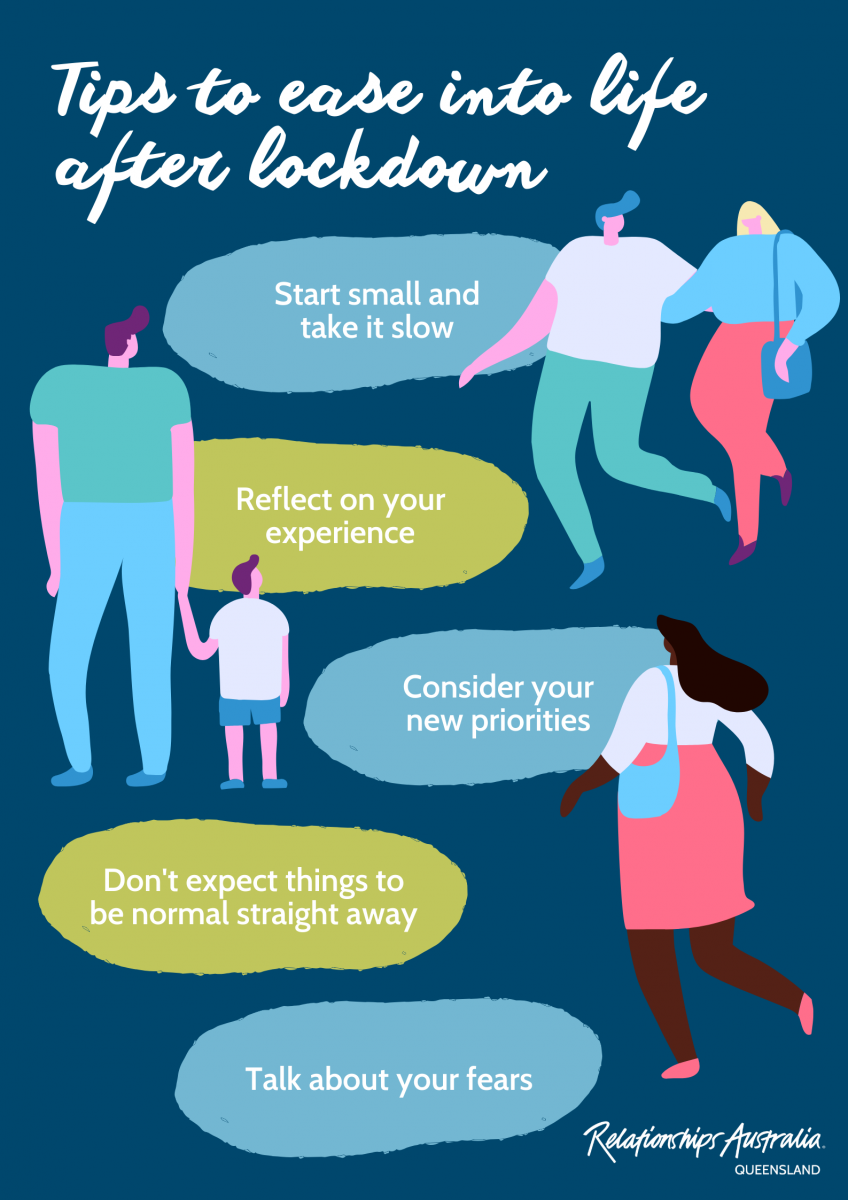
We hope these tips help you ease back into life after lockdown.


Start Small and Take it Slow

Some people can’t wait to pour into pubs and kick-start their social calendars, but if that’s not you, that’s just fine. Give yourself time to get back to a life where you left the house and saw other humans.

Socialise slowly with just a few friends at a time. Visit quieter cafés and restaurants before hitting up the hot spots. Ask your employer if you can alternate days working from the office and from home.

We’ve been on lockdown for months, and it’s going to be a big adjustment to go back to normal life. So don’t feel pressured to jump right back into exactly how things were before.


Reflect on Your Experience

We’ve just been through a global pandemic, guys. Countries closed their borders, businesses and schools closed their doors, and visiting our friends and families was prohibited. Life as we knew it, and our plans for the year, were thrown out the window.

Instead of trying to slide straight back in your old life, allow yourself to reflect on this event. Talk to your friends and family about how it impacted you, what you found difficult, and any positives that came from it. Or write these things down in a journal to keep track of how you’re feeling.


Consider Your New Priorities

For some people, self-isolation was the catalyst for self-discovery. It forced us to pause and take stock of how we spent our time, energy, and money when things were ‘normal’.

Maybe you don’t miss the things you thought you would. Maybe you’d rather socialise in the outdoors than on a night out. Maybe you’ve realised how much you value alone time. Now’s the time to create new priorities and habits than align with the life you want to live moving forward.


Don’t Expect Everything to be ‘Normal’ Straight Away

There are plenty of ways things will remain different to how they were pre-coronavirus. We can probably expect queues, obsessive hand washing, and the 1.5m rule to follow us into the foreseeable future.

Stay vigilant and pay attention to health and safety advice. Follow the rules venues have in place for your safety, wash your hands regularly, and keep a safe distance from others when you’re out and about.


Talk About Your Fears

Literally everyone in the world has been impacted by this. If you’re feeling anxious or finding it hard to adapt to the latest lift in lockdown restrictions, chances are some of your friends, colleagues, family members, and neighbours are too.

The coronavirus is sure to be a key topic of conversation in many social circles for a while, and talking about your fears and concerns may help you understand and process things.

If you need some help coping, our tertiary-qualified counsellors can provide support. You can learn more about our confidential counselling options and how to book an appointment here.

Keep looking after yourself. Discover our tips to protect your emotional wellbeing during the coronavirus outbreak.


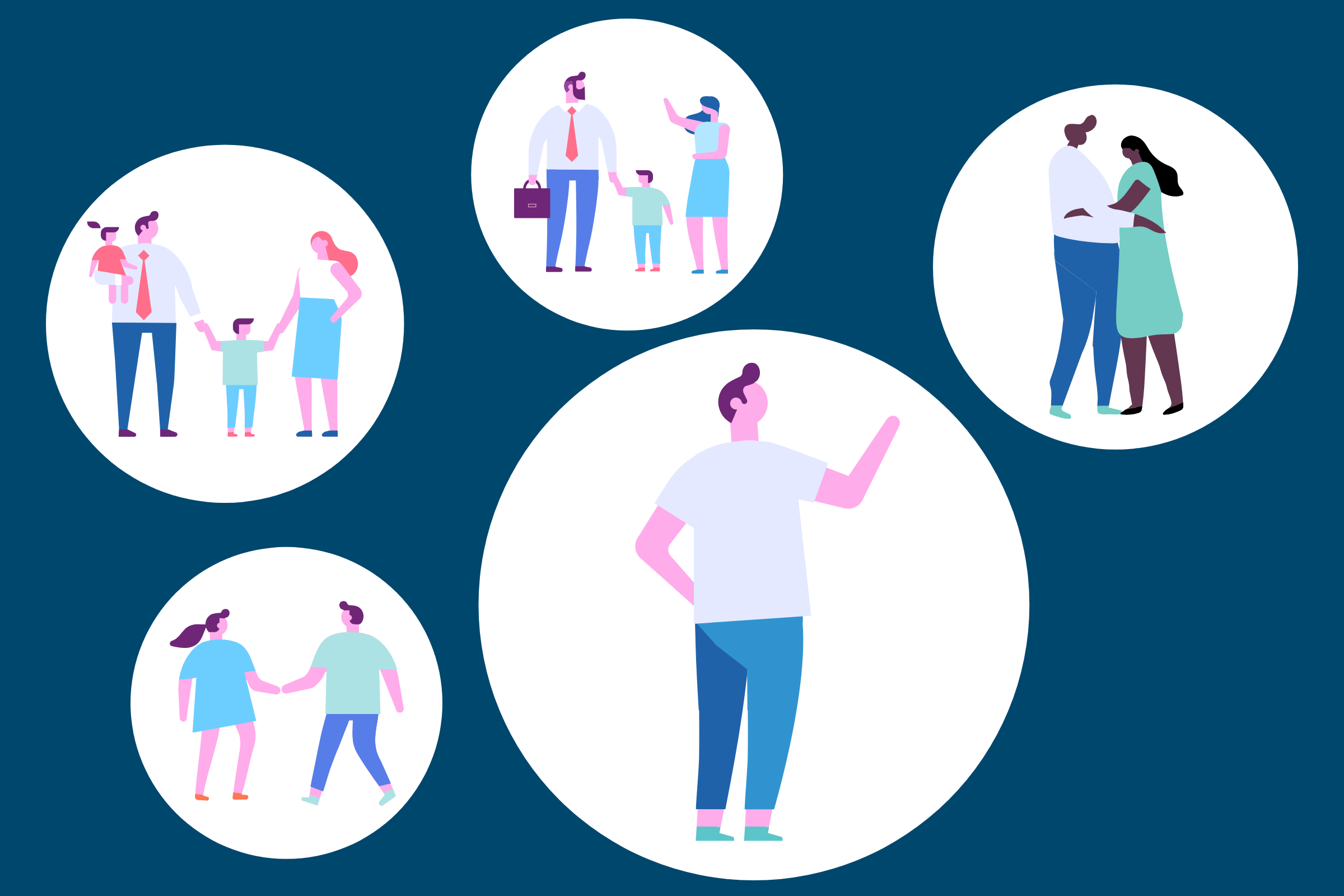
Life after lockdown infographic summarising tips featuring cartoon people in bright colours

Self-Isolation and Depression

Social interaction is a fundamental human need – so it’s no wonder the global ‘social distancing’ movement is causing some of us to feel disconnected and lonely.

But while self-isolation is impacting everyone, people with existing mental health issues like anxiety and depression may feel particularly vulnerable while physically distancing themselves.

Relationship and Family Counsellor Val Holden sheds some light on how this tough time might be impacting our mental health and shares some tips for people who are feeling down in self-isolation.


How Social Distancing Impacts Mental Health

If you’re feeling a little out of sorts or downright miserable due to the coronavirus restrictions, you’re not alone. As we keep hearing, these are ‘unprecedented times’ that we’ve never experienced before, and it’s hard to know how to handle such upheaval.

Val explains that it’s normal for people to feel down when our usual routine has been tipped on its head.

“When people can’t get out and do what they normally do and they’re stuck at home, sometimes on their own, life can become very lonely and small,” she says.

“Just to be able to get out to walk on the beach, have a walk around the shops, or go and do the normal things you do in a day is very rewarding and takes you out of yourself. To be stuck at home inside the same four walls all day can become very much like a prison – whether you are mentally well or not.”

“If you couple this with anxiety around your own health and safety, it can compound and become a much bigger issue than just staying at home,” Val explains.

For some, the coronavirus (and a rough start to 2020 in general) has exacerbated symptoms of existing mental health issues. For others, it’s triggered symptoms of depression and/or anxiety that may not have been previously present. And while depression, anxiety, and other mental conditions aren’t something we can simply switch off, Val advises that there are ways we can attempt to improve our mood at this time.

“Depressive feelings and anxiety are not something we can always control,” she says. “People talk of them coming over them in waves, and the feeling of being out of control. But we can control some things in our lives – so start trying to control the little things. Get out of bed, make a nice meal, ring or contact a friend; push yourself to take control of yourself again.”


Warning Signs of Depression

Everyone feels down from time to time. It’s a normal part of life, and if you ask us, a global pandemic is a pretty understandable trigger for feelings of hopelessness and despair.

Some of the signs and symptoms of depression might include:

  • Feeling overwhelmed, irritable, disappointed, and sad
  • Withdrawing from friends and family
  • Not doing usual enjoyable activities
  • Not finding joy in things you normally would
  • Finding it hard to concentrate
  • Relying on alcohol and other substances
  • Feeling tired or run down all the time
  • Loss or change in appetite
  • Changes in sleep patterns.

“Withdrawing into yourself, not answering text messages, phone calls, or being on social media could all be warning signs,” Val adds.


Practical Tips to Cope

Of course, everyone’s experience with depression and other mental illness is unique, and it’s often best to seek professional advice specific to your individual circumstances. But there are a few things you can do at home if you’re feeling down in self-isolation.

Val recommends keeping yourself busy and taking advantage of some extra free time to do things you enjoy or have been putting off.

“Find a hobby, or do something you have always wanted to do but have never had the time,” she says. “Pull out that jigsaw puzzle you never started, read a book that’s been on your bookshelf for ages, find a funny movie to watch, go for a walk, or plan a trip for when things are better. Push yourself to make contact with family and friends via phone, Zoom, or social media.”

During this time of disruption, it’s important to try and maintain as much ‘normal’ as you can.

“Try and make an effort to have a routine in your life,” Val suggests. “Even if you don’t have to leave the house, keep to a routine. Get up and shower, have something to eat, find a nice sunny spot to have your morning coffee.”

Val also recommends limiting exposure to news and newsfeeds around the coronavirus, and reminds us that ‘this too shall pass’.

“Life may change, but it does go on,” she says. “Family and friends care and just want to know you are OK.”

If you’re struggling to cope on your own, you can access our counselling over the phone or via Zoom video chat. Call 1300 364 277 Mon-Fri 8am-8pm or Sat 10am-4pm to make an appointment.

Worried your partner might be having a tough time? Check out our tips for how to support a partner with depression.

Keeping Yourself Safe Online

Are you at risk of being targeted for online abuse? Let’s take a moment to think about safety when using devices that are connected to the internet.

Social media, video-conferencing apps, voice calls and text chats have been helping to bridge the physical divide brought about by COVID-19. So we have been working, learning and socialising online more than ever before.

For many Australians, this has been a positive experience. For others, though, they are more at risk than ever when it comes to experiencing online abuse such as stalking, sharing of intimate images, or harassment. While these abusive tactics are not new, the eSafety Commissioner of Australia has seen almost double the usual number of reports in the past month.


Am I at risk?

You may be at risk if you are:

  • A survivor of domestic and family violence
  • A survivor of stalking.

You may be at higher risk than normal if you know that your abuser has had physical access to an unlocked digital device that you possess. This is heightened even more if that person also has a medium-to-high level of technical skill.


What actions can I take?

If you are the target of online abuse, please remember that it is not your fault. You are not on your own, and there are practical steps you can take to protect yourself and to deal with the abuse. We’ve compiled some tips from reputable sources such as the eSafety Commissioner and WESNET to help you stay emotionally and physically safe from online abuse.


Stay safe on your devices:

  • Avoid downloading apps that track your location or contacts unless you are confident your phone has not been compromised by spyware.
  • Report image-based abuse to eSafety, who can help to remove intimate images and videos that have been shared without consent and provide access to counselling and support.
  • Avoid revealing personal details such as your address, email address, phone number and birthdate on any apps or other online platforms.
  • Disable location services on your devices and avoid ‘checking in’ to places and venues.
  • Enable Bluetooth only when needed and ‘remove’ paired devices when you are not using them.
  • On Apple devices, turn off Airdrop to avoid being sent content by people you don’t know.
  • If you’re meeting with people and you don’t want it known, leave your phone at a safe distance from people you are meeting with, or consider leaving it behind if it is safe to do so.
  • Trust your instincts.
  • Take legal action if it is appropriate and if you feel up to it. If technology is being used to abuse, stalk, threaten or defame you, there are Commonwealth, state and territory laws that may apply.


Stay safe on your social media accounts:

  • Check the settings of your social media accounts to keep your personal information private.
  • Update your settings so that others cannot tag or post videos or photos of you.
  • Avoid hashtagging anything you don’t want to become public.
  • Avoid posting content online that may put you or your family at risk, such as revealing where you go and what you do together.
  • Report any abuse to the social media service’s safety centre. Depending on the platform, you can generally also report, block, ignore or mute the abuse.


If you are in danger right now, contact police on Triple Zero (000).

For non-emergencies, you can call the Police Assistance Line on 131 444 or contact your local police station.

If you are unsure on how to change settings to help protect yourself please seek assistance. These resources from eSafety Commissioner and WESNET are a good place to start.

A Client’s Experience with Online Counselling During COVID-19

With everything that’s going on at the moment, we want you to know help is still available when you need it.

Online counselling is a great way to get professional support from the comfort of your home. It could be the perfect option if:

  • You’re following social distancing guidelines
  • You live in a remote area
  • You live with mobility restrictions
  • You don’t have time to get to an in-person appointment
  • You don’t like to leave your home.

We understand you might be hesitant to access online counselling if you’ve never tried it before. So we wanted to share one of the many positive experiences with this service to encourage others to take care of their mental wellbeing, even when they can’t access face-to-face support.

Natasha was kind enough to share her story with us here.


Natasha’s Story

Natasha sought support from RAQ when she was having difficulties with her marriage.

“My marriage was irreparable, so I needed support and guidance for my 12-year-old daughter and myself,” she states.

She accessed the online counselling service on both her laptop and her phone. RAQ delivers online counselling via Zoom, a video communication tool that can be used on your computer, laptop, tablet, and smartphone.

Natasha’s favourite thing about online counselling?

“Not having to work through the anxiety of having to get myself physically to the appointment,” she says. “The convenience of being able to have the counselling from my home or work office.”

Reflecting on how online counselling has helped her during this time, Natasha explained, “I have been able to work through the behaviours that kept me repressed and depressed. I’ve been able to better manage my emotions as they arise with the breakdown of the family unit, and help manage my daughter through as well. I have been supported, which means I’ve been able to support my daughter.”

To those thinking about using online counselling, Natasha says, “It’s a great way to access support if you’re time poor or have any anxiety about actually getting to an appointment.”

“The people that I have encountered have been professional, respectful, and resourceful. Their adaptation to information given is a testament to the level of their training and as great human beings.”

We’re delighted by Natasha’s feedback and thank her for sharing her experience.


How to Access Online Counselling with RAQ

  • You can access our online counselling services in these easy steps:
  • Phone the Client Contact Centre (Mon-Fri 8am-8pm, Sat 10am-4pm): 1300 364 277
  • You’ll be booked in with a practitioner for an appointment over the phone or over video
  • If you’re booked in over video, you’ll be emailed an invitation link to the Zoom session
  • When you click the Zoom link at the approved appointment time, you’ll be admitted into your private Zoom room with your practitioner.


Make the most of your online counselling session with these 10 tips to create a suitable environment.

10 Tips for Your Online Counselling Session

Online therapy is a great way to get the support you need in the comfort of your own home.

From Skype to Zoom, there are plenty of video conferencing platforms that make online counselling easy and convenient for anyone with an internet connection. But there are a few extra things to think about when preparing for your online counselling session.

Create a suitable environment and make the most of your online counselling sessions with these ten tips.


1. Give yourself time to set up

Allow at least 5-10 minutes to get set up before your session to avoid rushing to get ready at the last minute. This will allow you to test out your video and microphone and troubleshoot any technical difficulties without eating into your appointment time.


2. Ensure your internet is stable

A reliable internet connection is a must. If your Wi-Fi is patchy in certain parts of your house, try setting up next to the router to ensure a strong and fast connection.


3. Find a private room or space

Having someone else in the room might make it hard to concentrate or make you feel uncomfortable sharing certain things with your counsellor. Privacy is important, so find a quiet, private room or space for your online counselling session – and keep energetic cats and dogs out.


4. Get the lighting right

Your counsellor wants to see your face! Make sure there’s enough light to show your face on camera, and sit in the centre of the screen with your head and shoulders in the picture (like a passport photo). Natural lighting is best, but use lights and lamps to make yourself visible if need be.


5. Turn off ceiling fans

Ceiling fans can create a flickering effect on camera. It’s best to turn them off during your online therapy session.


6. Use earphones

Whether you have noisy neighbours, live near a busy road, or your partner likes to play the TV loud, background noises can be an unwanted distraction. Protect your concentration and use earphones or headphones to block background noise out.


7. Close other tabs

Having other internet programs open can chew up some of your internet and cause your system to slow down. Not to mention, notifications and alerts from Facebook and other sites can interrupt the flow of your conversation. Close other tabs or mute notifications before your session.


8. Make a list

If there are a few things you’d like to talk about in your online counselling session, it can help to write a list. You can refer to your list if you lose your train of thought or get interrupted by your child, partner, or pet.


9. Put your phone away

Phones are distracting even when they’re on silent. Remove the temptation to check your phone or watch notifications lighting up the screen by putting it in a cupboard or drawer until your session is over.


10. Have a backup plan

Technology doesn’t always work the way we want it to. It’s a good idea to have a plan B lined up just in case your online counselling session gets interrupted by a dodgy internet connection. You might like to take your session over the phone if this happens.


Bonus Tip: Take some time after your session

After face-to-face counselling, you’d normally have time on the trip home to think about the session. But with online counselling, it can be easy to immediately go back to your daily tasks. If you can, take some quiet time to reflect on the things you discussed and how you’re feeling.

You can learn about Relationships Australia QLD’s counselling service here, or call us on 1300 364 277 to talk to a professional counsellor over the phone or book your video counselling session. This number is available Monday-Friday 8am-8pm and Saturday 10am-4pm.

Coronavirus Disruption: A Counsellor’s Experience with Going Online

A lot has changed over the past few months. The coronavirus outbreak has impacted how we work, play, learn, and interact with one another.

Social distancing measures have forced some companies to close their doors, while others have had the chance to adjust their service delivery.

The coronavirus presented Relationships Australia QLD (RAQ) with the opportunity to fast-track the advancement of our online capabilities and continue to provide clients with the support they need.

Relationship Counsellor Shirley Hussie has been offering counselling sessions for individuals and couples over telephone and video chat. We asked her to share her experience with adapting to the disruption of COVID-19, and her advice for anyone considering online counselling.


Getting Up and Running

Shirley has been working from her home since Easter. Like many RAQ practitioners, she’s been providing counselling sessions via telephone and Zoom.

No one could have predicted the extent of the coronavirus crisis and how it would impact businesses so greatly, and Shirley praises RAQ for their rapid response.

“What they were able to accomplish in that first week was phenomenal with getting everyone set up to work remotely. Hats off to IT – they did an incredible job and were so helpful,” she says.

“The support that has been offered by Management has been extraordinary – that includes my Team Leader, Supervisor, and everyone up the line. I have felt so supported through the whole process, which has made the day-to-day challenges and changes easy and effortless.”

Shirley explains there were a few challenges at first, including feeling isolated and lonely without the face-to-face contact with other staff members. She also notes logistical bumps along the road.

“The initial challenge was gaining access to a computer and feeling comfortable and secure with using the technology – primarily Zoom. I used an older computer from the venue for the first week, after which time I was provided a brand new computer, which is fabulous,” she explains.

“RAQ offered loads of support around using Zoom and allowed plenty of time to become confident and competent with using it before going live with clients. I’m proficient with Zoom and love it now!”

Shirley commends her colleagues for being resilient, resourceful, and innovative, and continuing to provide quality services for clients during this time.

She thinks it’s important to embrace the changes caused by COVID-19, stating, “I believe the services provided to the clients via Zoom and telephone have been just as – if not more – powerful and transformative, as clients have the luxury of staying in the safety of their own home and don’t have to deal with the stress of childcare, traffic, or taking time off work. I would love to continue offering Zoom sessions once we return to the mothership.”

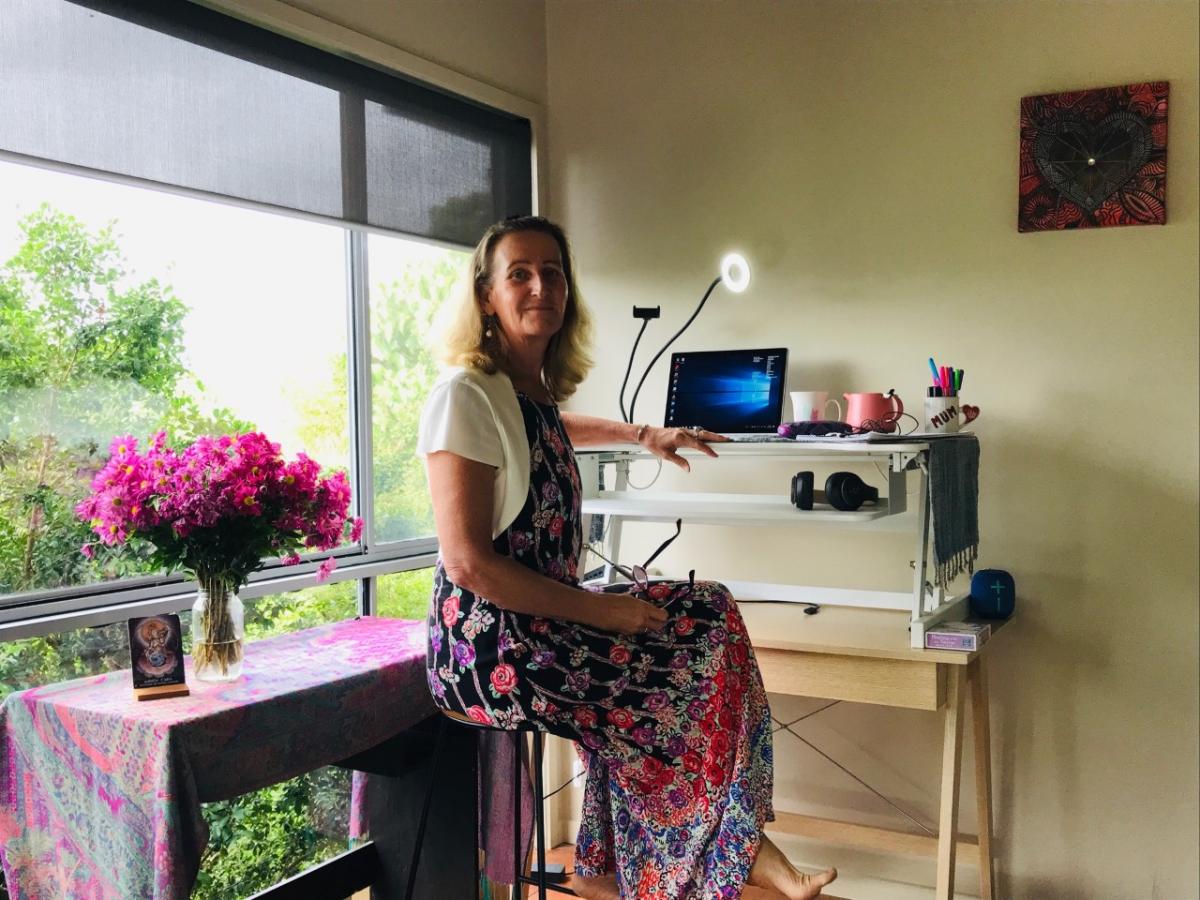
Relationships Australia QLD counsellor working from home in bright home office


Online Counselling Tips for Couples

Our telephone and video counselling is a service provided to individuals and couples who need support or just want to talk. If you’re considering online couples counselling, you might find Shirley’s advice helpful.

“In regards to couples work, I encourage clients to take the same amount of time that they would travelling to the venue to connect with each other prior to the session. I suggest they also spend some time together and have a cup of tea or go for a walk and talk after each session,” she says.

“Couples have reported really enjoying this time, and it shows them they can have ‘date nights’ or ‘date breakfasts’ in the comfort of their own home, and that ‘date nights’ don’t have to be an extravaganza or expensive.”

Shirley explains that having couples counselling from home can encourage ongoing conversation in that space.

“Having the session in the comfort of their lounge chair gives them a template/association to having deep and meaningful conversation from their lounge chair,” she explains.

“Just as they associate the counselling room with time spent talking about their relationship, they now have this association with their lounge chair. I think this is a very positive thing and will have ongoing profound beneficial impacts on the relationship by creating the memory of being able to have difficult or challenging conversations in the comfort and safety of their own home.”


Our Remote Counselling Services

You can access our remote counselling services in these easy steps:

  1. Phone the Client Contact Centre (Mon-Fri 8am-8pm, Sat 10am-4pm): 1300 364 277
  2. You’ll be booked in with a practitioner for an appointment over the phone or over video
  3. If you’re booked in over video, you’ll be emailed an invitation link to the Zoom session
  4. When you click the Zoom link at the approved appointment time, you’ll be admitted into your private Zoom room with your practitioner.


Been online more than ever during the coronavirus? Stay safe with our article How to Protect Yourself Online During the Coronavirus.

How to Handle Social Distancing When You Live Alone

For those who live alone, social distancing guidelines mean being more cut off than ever.

Self-isolation is impacting us all, but people stuck at home without company may be particularly struggling without human contact.

This is new territory for all of us. We’ve never had to physically isolate ourselves from our loved ones for an extended period of time before. And it’s totally normal to feel uncomfortable, anxious, and lonely.

If you live alone, there are a few ways to prioritise your mental health and make social distancing less lonely and more manageable.


Maintain Connections

Social distancing has our social calendars looking pretty sad. Enter: technology.

It’s more important than ever to maintain connections with friends and family – especially if you’re not getting your usual social fix in the home.

Replace in-person catch-ups with virtual check-ins via phone and video calls. Plenty of your normal social activities can be continued over video call – from book clubs to happy hour.

Try to schedule regular check-ins with your loved ones to maintain social contact and connect with your support network every week. They don’t have to be lengthy conversations every time – just a quick 10-minute chat can make all the difference.


Plan Something Exciting

Sure, we’ve had to cancel exciting social events and put plans on the backburner. But just because we may not be able to tick off our plans doesn’t mean we shouldn’t keep daydreaming about them.

According to research, anticipating a positive event can help reduce negative emotions, increase positive emotions, and improve our ability to cope during stressful times. So whether it’s a holiday or a party, planning an event to anticipate may help lift your spirits.


Find a Routine You Love

There’s a lot going on right now that’s out of our control. A great way to cope with uncertainty is to take control of what we can – like our daily routine. This is a great time to create new habits and make a routine you want to jump out of bed for.

When creating your routine, consider the activities that make you feel good and support you to accomplish the things you need to each day. For example, you might like to start the day with a walk and a shower to feel energised.

A few building blocks of a routine that supports mental health include:

  • Getting enough sleep
  • Eating healthy foods
  • Staying hydrated
  • Moving your body.
Want to see how famous historical figures like Benjamin Franklin and Pablo Picasso spent their days? Check out this interesting infographic.


Challenge Yourself

Keep your mind occupied by engaging in a creative pursuit. This could be learning a foreign language, picking up an instrument, trying a new recipe, or expressing yourself through painting.

Trying something new is a great way to stay busy, build confidence, and take your mind off worries and responsibilities for a while. In fact, research shows creative hobbies can reduce stress just as well as exercise.


Get Out of the House

Being cooped up at home without company is a recipe for cabin fever. Not to mention, entering hibernation mode can have negative impacts on your mental health.

Nature is known to help alleviate feelings of anxiety and boost your mood. So whether you’re going for a walk at a national park or simply appreciating your garden, take time to get outside in the fresh air and sunshine every day. If nothing else, it’ll at least give you a change of scenery from your living room.


Prioritise Self-Care

In the spirit of looking on the bright side, why not take self-isolation as an opportunity to focus on your self-care? COVID-19 has forced many of us to slow down and take stock of how we normally spend our time. And it turns out a lot of us don’t normally prioritise our self-care.

The current health situation is pretty overwhelming and stressful. So now that we have some spare time up our sleeves, we think it’s important to take extra care of our mental and emotional wellbeing.

Here are some self-care activities you can do during the coronavirus:

  • Take a bubble bath, complete with candles and music
  • Start the day with a guided meditation or some gentle stretching
  • Give yourself a pedicure while wearing a face mask
  • Put your phone on ‘do not disturb’ while reading a good book
  • Order your favourite meal from your favourite restaurant
  • Get a takeaway coffee or hot chocolate and drink it in a park (if social distancing rules allow you to).
Discover more tips to protect your emotional wellbeing during the coronavirus outbreak.


Talk to Someone

Finally, if you’re feeling lonely or not coping well during this tough time, reach out to someone you trust. Feelings of anxiety around the coronavirus and social distancing are normal, and talking them through can help you understand and manage these feelings.

If you don’t have someone to talk to, try writing your feelings down in a journal. Or you can call our telephone counsellors on 1300 364 277 between 8am-8pm Monday-Friday and 10am-4pm Saturday.

For more inspiration, check out these 10 ways to make the most of self-isolation.

10 Fun Self-Isolation Activities for Kids

Trying to keep the kids entertained in self-isolation?

With schools, parks, and cinemas closed, many families are being forced to get creative with activities for kids stuck at home (there are only so many times you can watch Frozen II).

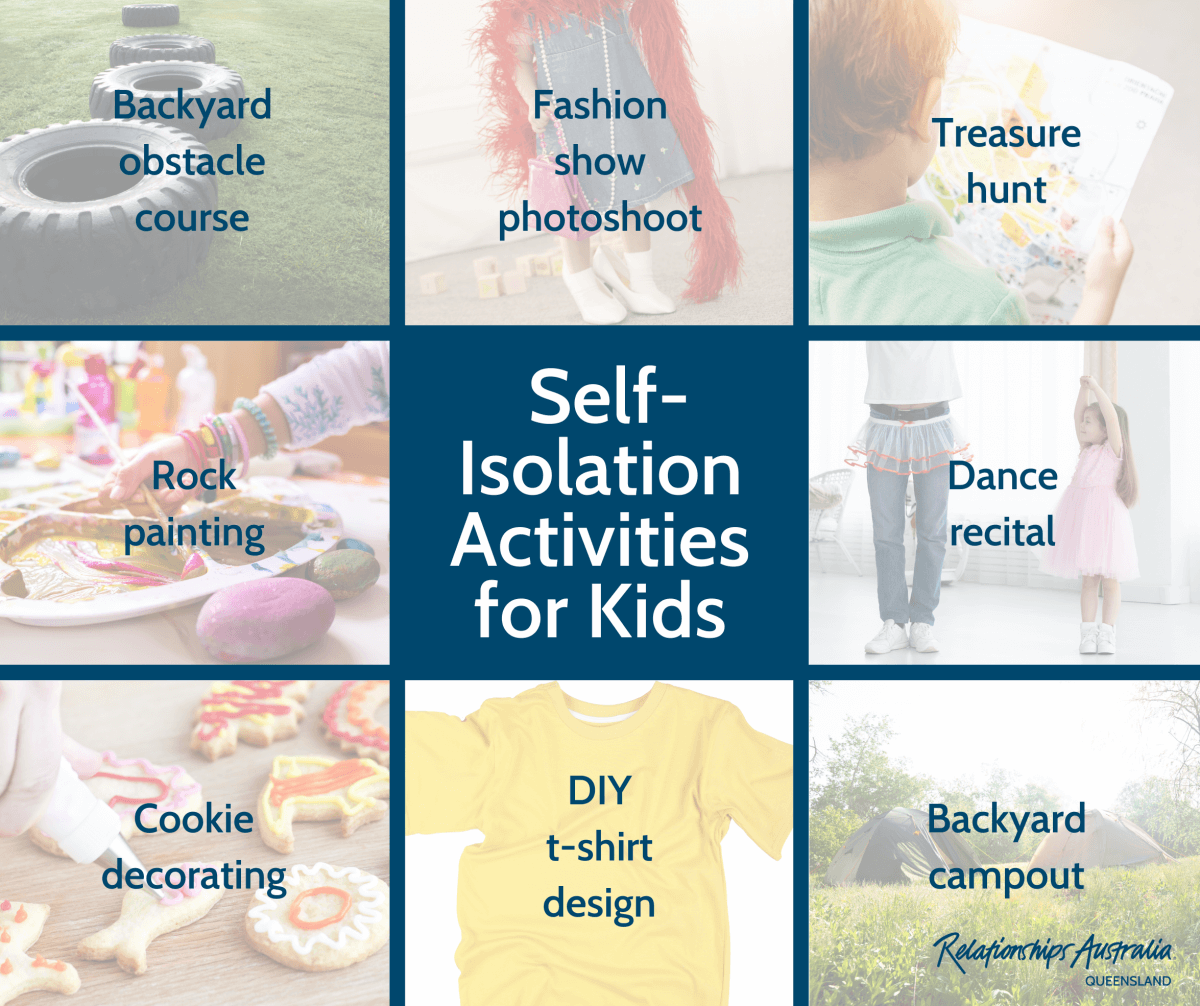
Keep the kids busy and your sanity intact with these quarantine activities for kids that can be enjoyed in the safety of your home and yard.


1. Exercise Dice

This is a great way to get kids moving and hold their attention for long enough to finish your coffee in peace. Just grab a die and assign an exercise or activity to each number, then get your children to take turns rolling it and performing the assigned action. Some exercise and activity ideas might include:

  • Jumping jacks
  • High knees
  • Hop on one leg
  • Air guitar
  • Pretend swimming
  • Penguin waddle.


2. Life-Size Drawings

Forget the A4 self-portrait and go big with life-size drawings! Get your child to lie down on butcher’s paper or several pieces of A4 paper stuck together and trace an outline of their body. Then they’re free to bring it to life by drawing their face and whatever outfit they wish.


3. Backyard Obstacle Course

Another great self-isolation activity for kids with energy to burn, a backyard obstacle course is sure to keep the whole family entertained. Add some friendly competition by making it a race against siblings or parents, or challenge your child to beat their best time. Some obstacle ideas might include:

  • Running through the rungs of a ladder flat on the ground
  • Jumping over laundry baskets
  • Weaving around buckets
  • Crawling under a broom balanced on chairs
  • Kicking a ball through DIY goalposts
  • Knocking over a tower of plastic cups
  • Balancing on a timber beam.


4. DIY T-Shirt Design

If you have a t-shirt, you have a canvas. T-shirt decorating is perfect for a couple of hours of creativity and imagination. Set your kids up with a plain t-shirt and some colourful fabric paints, pens, stencils and brushes, and watch as they express themselves.


5. Housebound Treasure Hunt

Make a basic map of your home and hide ‘treasures’ around it (e.g. chocolates or small toys), marking each piece of treasure on your map. For older kids who can read, make your treasure hunt a little harder and use written clues/riddles to help them. For example:

Clue: I have four legs but no feet. When you’re tired, take a seat.

Answer: Chair

This combination of quiz and hunt is a great way to keep young minds active and entertained.


6. Fashion Show Photoshoot

Kids will love rummaging through their closets and costume boxes to put together their favourite outfits to show off to the family. Put on some fun music and get your camera ready to capture their best poses on the catwalk.


7. Backyard Campout

While we may not be able to go camping at our favourite beach or bush campsites, the backyard is the next best thing. This is one of our favourite self-isolation activities for kids experiencing cabin fever and in need of a change of scenery. Pitch the tent and roll out the sleeping bags for a night under the stars in your own backyard. Don’t forget the marshmallows!


8. Rock Painting

All you need is some acrylic paint, small paint brushes, and some rocks, and you’ve got yourself an afternoon of creative fun. Give them a wipe over to remove any dirt, then let the kids let loose with their masterpieces.


9. Dance Recital

Mini movers and shakers will be in their element performing a dance routine for the family. Challenge your kids to come up with their own moves or learn choreography online, like this fun and easy dance to “Can’t Stop the Feeling” by Justine Timberlake.


10. Cookie Decorating

You can’t beat cookie decorating for a quiet (and delicious!) indoor activity. Grab some plain biscuits or cookies (like Arnott’s Milk Arrowroot) or bake your own sugar cookies for the kids to decorate. You can make circular cookies or mix things up with cookie cutters in fun shapes. Just wait for them to dry and equip your kids with icing, icing pens, sprinkles, and premade edible icing decorations.

For more fun ideas, check out our list of ways for grandparents to stay connected with their grandkids from afar.


If you’re having a tough time and need someone to talk to, call us on 1300 364 277. Our telephone counsellors are available Monday-Friday 8am-8pm and Saturday 10am-4pm.