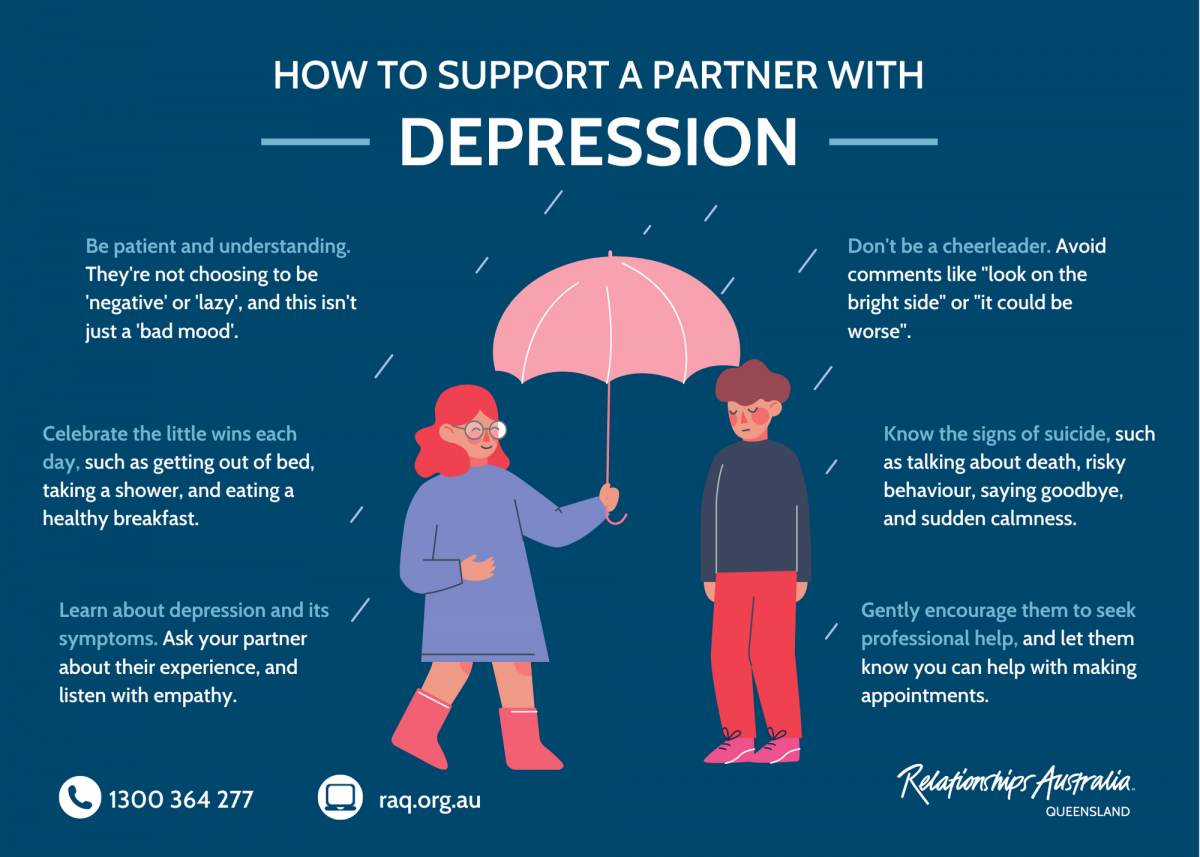
Depression is a common and serious mental illness that impacts many Australians. Research shows one in seven Australians will experience depression in their lifetime.
Many people find themselves supporting a partner with depression at some point, and the condition can take a heavy toll on relationships. Relationships can be a lot of work even when both people are in a good mental space. Couples dealing with depression face their own daily challenges.
No one wants to see their partner suffer, and living with a partner with depression can cause loved ones to feel overwhelmed, helpless, and even afraid.
Support from friends and family plays an important role in treating or managing symptoms. If your partner suffers with depression, there are ways to help them on the road to recovery and nurture a healthy relationship.
If you are in an emergency or there is an immediate risk of harm to yourself or others, please call 000.
Learn About Depression
The first step to help a partner with depression is to increase your understanding of the condition.
Depression affects everyone differently, and symptoms can vary and change over time. Some signs your partner might have depression include:
- Feelings of sadness, worthlessness, or guilt
- Loss of interest or pleasure in activities they normally enjoy
- Withdrawal from friends and family
- Anxiety, agitation, or irritability
- Changes in appetite or weight
- Changes in sleeping habits
- Fatigue and loss of energy
- Difficulty thinking, concentrating, or making decisions
- Thoughts of death or suicide.
There are plenty of reputable resources online that can help you learn about depression and mental health – such as these factsheets from Beyond Blue and SANE Australia – but the best way to understand your partner’s experience is to talk to them about it. Show an interest, listen with empathy, and ask open-ended questions such as:
- Can you help me understand how you’re feeling?
- What things do you find enjoyable at the moment?
- What helped you the last time you felt this way?
- What changes can help you feel better right now?
- What do you need from me?
Be Patient and Understanding
It’s understandable to get upset from time to time, but it’s important to remember that depression is a mental illness. Your partner isn’t choosing to be ‘negative’ or ‘lazy’, and it’s not just a ‘bad mood’ that they’re experiencing. Getting frustrated with your partner for being sad, detached, or not wanting to get out and do things may exacerbate their symptoms and make them feel worse.
It can be especially hard to understand what your partner is going through if you haven’t experienced depression yourself. Try not to take it personally and remember depression is no one’s fault. A little patience and understanding can go a long way in making your partner feel loved and supported.
Don’t be a Cheerleader
It might be tempting to jump in and try to ‘fix the problem’ with positivity, but this can make people suffering with depression feel even more alone.
Trying to cheer your partner up with comments like “look on the bright side”, “it could be worse”, or “you don’t have anything to be depressed about” can invalidate their feelings and trivialise their condition, making them feel worse.
Again, depression is not a choice, and your partner cannot make the decision to ‘snap out of it’. If you don’t know what to say, try simply listening with empathy, holding their hand, and telling them you’re there to support them.
Focus on Small Goals
Small activities like getting out of bed or taking a shower can take an immense amount of effort for someone experiencing a severe depressive episode.
It might help to work with your partner to set small, achievable goals on these days (e.g. have a shower, get dressed, eat breakfast) or break down larger tasks (e.g. apply for a job) into several small tasks (e.g. update resume, write cover letter).
Acknowledge these little wins and continue to encourage your partner to take small steps in a healthy direction each day.
Create a Supportive Home Environment
While you can’t cure your partner’s depression, you can encourage them to make healthy choices that may have a positive impact on their symptoms.
You can help by:
- Supporting them to have a healthy amount of sleep
- Buying and cooking healthy meals together
- Going for a walk or doing other exercise together every day
- Continuing to do the activities you enjoy together
- Providing emotional support and positive reinforcement.
Know the Warning Signs of Suicide
Some people with depression may be at risk of suicide. Seek immediate assistance if you recognise these warning signs:
- Saying they feel worthless or alone
- Feeling overwhelmed with hopelessness
- Talking about death or wanting to die
- Purchasing a gun or stockpiling pills
- Extreme mood swings
- Social withdrawal
- Noticeable changes in normal daily routines
- Uncharacteristically risky or self-destructive behaviour (e.g. drug or alcohol abuse or reckless driving)
- Giving away sentimental or expensive possessions
- Changes in personality and/or appearance
- Saying goodbye
- Getting affairs in order
- Sudden calmness.
These are just some of the signs that someone might be suicidal. Use your gut instincts and take any red flag seriously.
If you think your partner might be suicidal, don’t be afraid to ask them directly. If they say yes, stay with them and listen to how they’re feeling, then get the appropriate help – such as calling the Lifeline crisis line on 13 11 14, or 000 if life is in immediate danger. Or you can see if you can get them an immediate appointment with a GP or psychologist.
Gently Encourage Them to Get Support
Depression is a real illness that requires treatment. If your partner’s symptoms are severe enough to impact their daily activities, work, and relationships, you can help them by gently encouraging them to seek professional help.
You might like to talk with them about treatment options (e.g. therapy, medication, and lifestyle changes) and let them know you’re there to help with making and preparing for appointments.
There are plenty of support services available for people experiencing depression. Relationships Australia Queensland provides free over-the-phone counselling for anyone who needs support. You can call us on 1300 364 277 Monday-Friday 8am-8pm and Saturday 10am-4pm.
Look After Yourself, Too
Caring for someone with depression can be challenging, so don’t forget to take care of your own mental and emotional health.
Our over-the-phone counsellors are available to talk if you need some emotional support, too: 1300 364 277.
If you are in an emergency or there is an immediate risk of harm to yourself or others, please call 000.